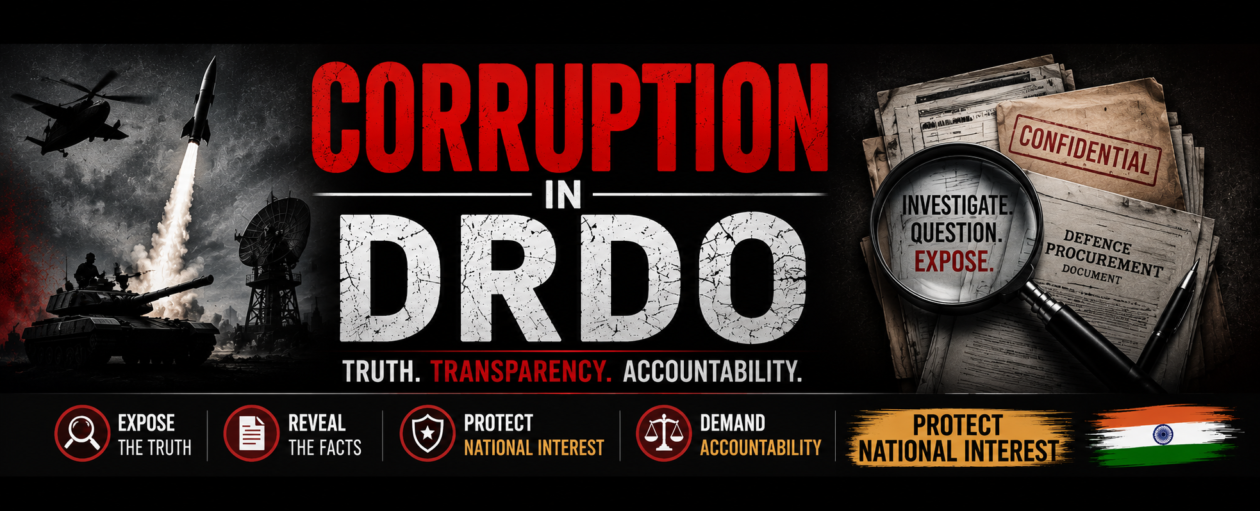
Tag Archives: Delhi

Chinese firm Delhi chose for CCTVs on US radar

Concerns have also been raised on the firm being owned by the Chinese government, adding a twist to the controversy over a Delhi government project to install 1.5 lakh CCTV cameras across the city.

By Shaurya Karanbir GurungET Bureau|May 23, 2018,

The Chinese firm is however, not new to controversies, with a growing number of US organisations either removing or barring the use of company’s products.

A Chinese firm whose subsidiary has been shortlisted to supply security cameras for the national capital is on a US watch list, with an advisory on threats, including remote hacking and potential backdoor access.

Concerns have also been raised on the firm being owned by the Chinese government, adding a twist to the controversy over a Delhi government project to install 1.5 lakh CCTV cameras across the city.
While Defence public sector unit Bharat Electronics LimitedNSE 1.13 % (BEL) has been selected, it bid to supply cameras manufactured by Prama Hikvision India Private Limited. Chandra Shekhar, a senior official with Prama Hikvision told ETthat Prama Hikvision is a subsidiary of Hikvision.

However, Prabhat K Bhattacharya of its PR firm Consocia Advisory, claimed Hikvision owned 58% of the Indo-China venture Prama Hikvision.

The project came under controversy after Delhi Pradesh Congress Committee president Ajay Maken alleged that the AAP government had compromised national security. The Chinese firm is however, not new to controversies, with a growing number of US organisations either removing or barring the use of company’s products. The firm’s cameras were removed from the US Embassy in Afghanistan and another of its army base.

Similarly, the US Air Force last year cancelled a tender for Hikvision video surveillance. The US government’s GSA — which provides centralised procurement for it — has removed Hikvision manufactured products from sale. Security concerns of Hikvision products have been raised in the UK as well.

A US Department of Homeland Security advisory dated May 4, 2017 states that the products are “remotely exploitable” and require a low skill level to exploit. The vulnerabilities, advisory explains, are “improper authentication” and “password in configuration file”.
“Successful exploitation of these vulnerabilities could lead to a malicious attacker escalating his or her privileges or assuming the identity of an authenticated user and obtaining sensitive data,” the advisory reads. Prama Hikvision, however, claims that “allegations of a backdoor are false”.

“We have not, nor would we, intentionally place a “backdoor” in any of our products for any government or third party. Access and control of the video cameras and content will be restricted only to the end users and Prama Hikvision will not be able to access them at all,” the company said in response to an ET questionnaire.

In India, these security concerns may have not deterred procurement. Delhi government officials claim that the Delhi Metro Rail Corporation (DMRC), defence ministry and Defence Research and Development Organisation (DRDO) have procured cameras from Hikvision, in response to Maken’s allegations.

Individual questionnaires were sent to these organisations but received no response.

On its part, BEL said there is no compromise on security while supplying products for defence forces. “The requirement is for civilian use and not for any military application…BEL will never compromise on the security related aspects while supplying its products for defence forces. Supply of CCTV cameras for public use in various constituencies in Delhi does not violate any security norms,” BEL said in response to queries by ET.

While the contract is yet to be signed, controversy looms large with the Lieutenant Governor of Delhi creating a high-powered committee to create a standard operating procedure for installing CCTV cameras and the AAP-led government opposing the move.

RTI to Indian Airforce on IACCS Scam

To                                                                                            11 June 2019

Wg Cdr Suman Adhikari.

CPIO.

Room No. 160, Dte of PS,

Air HQ (VB), Rafi Marg,

New Delhi 110106

Hello,
Kindly provide me with the following information requested under the purview of the Right to Information Act, 2005 in respect  of CVO, BEL Mr. S. Shiva Kumar letter No:21328/ 399&426/ BEL/GAD/18-19 Dated:29 March 2019 subject Detailed Enquiry done on the allegations of Irregularities Gross violations in the appointment of Design Consultants and in the execution of IACCS project.

  1. Whether IACCS Directorate, Air force received any communication from BEL that CVO BEL is investigating on the allegations of Irregularities Gross violations in. execution of IACCS project, Yes or No
  2. If yes, then provide the date of receiving such communication from BEL on above said matter..
  3. Whether IACCS Directorate, Air force informed about vigilance inquiry on IACCS project to their respective staff. Yes or No
  4. As BEL vigilance investigation team mentioned in its report no Nil dated 20.03.2018 that Air force staff not cooperated in investigation, as they tried to restricted entry and not provided CCTV footage and other record in behalf of corrupt BEL officials working on site. Please provide whether IACCS Directorate, Air force received BEL vigilance report of 20.03.2018.
  5. Provide that Whether IACCS Directorate, Air force received any communication from BEL in respect of non cooperation of Air force staff of IACCS project.
  6. It is observed by investigation team and they collected records of evidences that in some IACCS project sites Air force staff provided unauthorized entries like M/s C S Constructions Pvt Ltd, Delhi personals. The firm has no official role in IACCS project. Any communication from BEL or any other agencies Yes or No
  7. Provide if the IACCS Directorate, Air force received any information that key company M/s R D Konsultants who was responsible for PPR/DPR and consultant for all design aspect of IACCS project declared bankruptcy or disassociated from IACCS project from BEL. Yes or No
  8. If yes, then provide the step taken by IACCS Directorate to ensure to protect the national security compromise in respect of project.
  9. Provide that any inquiry committee constituted by Air force on misshape of IACCS project. Yes or No


Regards

Prabhu  Dandriyal,
21-Sunderwala, Raipur,

Phone 0135- 2787750, Mobile- 9411114879,
e-mail id prabhudoon@gmail.com  website www.corruptionindrdo.com

Registration Number         MODEF/R/2019/51797


Start with how to make a Rifle

We pay a price when we let other countries set our pace. One day Donald Trump includes India in the list of those “who are robbing America” and threatens to levy high taxes on “thousands and thousands

US and Indian flags (File photo | Reuters)

Published: 05th August 2018 04:00 AM
By T J S George
We pay a price when we let other countries set our pace. One day Donald Trump includes India in the list of those “who are robbing America” and threatens to levy high taxes on “thousands and thousands” of Indian motorcycles imported into America. This was when India cut duty on the glamorous Harley-Davidson from 75 per cent to 50 instead of the 0 per cent Trump wanted. Another day Trump praises India and green-lights the sale of unmanned aerial combat vehicles to India, a deal that was previously denied. These missile-firing drones have a sea variant reputed to be effective in coastal defence. No doubt, they can be decisive in beating back attacks such as the 26/11 terror strike in Mumbai.

Is India expected to cringe when Trump threatens it, and feel elated when Trump flatters it? Our concern should be not that this is a man the world mistrusts because of his unpredictable mood shifts; our concern should be the assumptions that are taken for granted, seemingly by all, in US-India dealings.

The American turnaround on the sale of hi-tech weapons such as the drone is a case in point. This looked like a systemic shift rather than a Trumpian twinkle. Nevertheless, India needs to be cautious for at least three reasons. First, America now recognises India as a full partner in its defence strategies and considers this as an “upgradation” of India. Second, Delhi sought a favourable nod from Washington before moving to buy an anti-missile defence system from Russia. Both these factors are linked to the third: Washington’s eagerness to block China’s growth as a world power.

Barack Obama’s America had formally accepted India as a “major defence partner”. But the partnership gained muscle only when Trump moved India into America’s tier-I list of countries to which sensitive weapon systems could be exported without special licences. Trump has repeatedly stressed India’s importance in what he calls the Indo-Pacific region. This recognition led to Washington waiving its sanctions provisions and thereby enabling India to buy Russia’s 39,000-crore air defence missile system.
What does all this really mean from India’s standpoint?

It is easier to see what it means to America: It opens a big market for American weapons and gets a major regional power to be involved with American defence policies in the region. There could well be a section of Indians who see it as a sign of progress when (a) America upgrades Delhi to tier-I for military sales and (b) permits Delhi to buy Russian weapons. Other sections may see it as demeaning when (a) India is expected to feel good about upgradation for purposes of buying American weapons and (b) sanction-scared Delhi seeks American permission to buy Russian weapons.

Both schools will have to see as unacceptable the extent to which India is dependent on other countries for its essential defence needs. The proud exhibit on our weapons front is the Brahmos missile. But 65 per cent of it consists of imported components. INS Vikramaditya, the pride of the Indian navy, was formerly a Russian vessel mothballed because of age. , our first “indigenously built” nuclear submarine, took in extensive help from Russia. HAL, a competent public sector company, has received discouragement from successive governments.

Its Tejas aircraft has been waiting for decades to get operational clearance. Its plans over Rafale jet fighters fell flat when the project was taken out of its hands and given to Anil Ambani’s company. Last year an Indian-made rifle was rejected by the Indian Army. Even bulletproof jackets made in India are unpopular with our defence personnel. Despite a long history of defence research, proud achievements in rocket science and slogans like Make In India, India remains the world’s largest arms importer.

When America recognises as a “major defence partner” a country that cannot produce even a rifle, it is clear that it sees India as a profitable market for its pricey weapons. In the process India loses opportunities to develop foreign policy, especially China policy, for India’s benefit as distinct from the benefits of “Indo-Pacific”. China is currently producing weaponry so sophisticated that the US has started to worry. India need not have been left so far behind. The achievements of its space programme and of its scientists in Silicon Valley point to the talent available to India. But the defence ministry is manned by IAS generalists while the country is at the mercy of parties and politicians who put their interests above the nation’s. How can one get more than what one deserves?

CBI carries out searches in Rs 500-crore land scam in Delhi

The CBI today carried out searches at seven locations, including the office and residential premises of an army officer, in an alleged land fraud worth Rs 500 crore.
By: PTI | New Delhi | Updated: May 15, 2017 9:17 PM

The case relates to alleged fraud by Lt Col M G Thimmaya, the then Estate Manager, DRDO, and a property developer N H Rustumji in filing a joint memo before the Supreme Court in a land dispute matter. (PTI)


The CBI today carried out searches at seven locations, including the office and residential premises of an army officer, in an alleged land fraud worth Rs 500 crore. The case relates to alleged fraud by Lt Col M G Thimmaya, the then Estate Manager, DRDO, and a property developer N H Rustumji in filing a joint memo before the Supreme Court in a land dispute matter.
Thimmaya allegedly gave the memo in the Supreme Court in the land dispute matter which was different from that cleared by the Defence Ministry.
“The allegation is related to criminal conspiracy between the accused during the year 2004-06, pursuant to which the officer abused his official position and cheated the Government through the transfer of 12 acres and one gunta of land in favour of a private person against the decision taken by the Ministry of Defence,” CBI Spokesperson said here today.
The agency today carried out searches at the residential permises and office of Thimmaya, now with Defence Ministry in Hyderabad, and Rustumji in Bengaluru.
The vigilance department of the Defence Ministry had pegged the alleged scam at Rs 500 crore.


business ally’s resort in Mussoorie: Officials

ET Bureau | Jul 19, 2016
sachin toiDELHI: Cricketing icon Sachin Tendulkar had sought Defence Minister Manohar Parrikar’s help to rescue a plush holiday retreat he frequents in Landour, Mussoorie, from a security dispute with the Defence Research and Development Organisation (DRDO).
Such was the urgency of the matter that Tendulkar, a Rajya Sabha member, even cut short a trip to Australia last year just to meet Parrikar with this request, senior defence ministry officials familiar with the matter told ET.
The property in question is his famed summer den Dahlia Bank in the Landour cantonment area that has allegedly breached the 50-foot, no-construction zone next to the Institute of Technology Management, a sensitive DRDO establishment.
The home is partly owned by Tendulkar’s business partner Sanjay Narang. Parrikar is believed to have given a “patient hearing” to the Indian batting legend but desisted from making any intervention in the issue.
South Block officials told ET that the defence minister was unwilling to do so in a matter involving alleged illegal construction next to a sensitive DRDO laboratory complex.
Defence Minister Manohar Parrikar didn’t intervene
“Tendulkar had been trying to meet the minister and an appointment was set up. He spoke at length about the property case, which was heard out. However, no action was taken on the request put forward,” a senior official told ET.
Tendulkar didn’t respond to ET’s questions on the matter. The defence ministry declined to issue a formal comment on the issue.
The institute’s version is that Narang had obtained permissions to build tennis courts in what is called the ‘restricted construction zone’ around the establishment but instead went on to construct full-fledged buildings.
Narang did not respond to questions sent by ET but his representative, who did not want to be named, claimed that the area in dispute fell outside the zone. She further alleged that the DRDO institute had taken a “faulty stand” and had made “wrong interpretations”.
The hotelier owns several properties in and around the Landour cantonment area that has emerged as a highend tourist destination near Mussoorie.
However, these building activities have attracted controversy with a complaint on “illegal high-investment commercial activities” reaching the Central Vigilance Commission and Central Bureau of Investigation last month

Dadagiri of Dr G S Malik, CC R&D (RM), DRDO

To, 19th June 2016
Shri Manohar Parrikar,
Defence Minister,
Room No -104 South Block,
New Delhi-110011

Subject: Dadagiri of Dr G S Malik, CC R&D (RM), DRDO

Sir,
Website received inputs from various Labs/Establishments of DRDO and forwarding to you for necessary corrective measure; in this series enclosed letter is received from Delhi.

Regards

Prabhu Dandriyal,
21-Sunderwala, Raipur, Dehradun-248008
Phone 0135-2787750, Mobile 9411114879
Email prabhudoon@gmail.com website-www.corruptionindrdo.com

Enclosed
Copy of letter received by website

rac4

Dadagiri of DRDO Lab Director – DMSRDE, DRDO Kanpur

To                                                                                  6th June 2015                                                       Hon’ble Shri Manohar Parrikar,                                                                                                           Defence Minister,                                                                                                                                     Room No -104, South Block,New Delhi-110011

Subject: Dadagiri of DRDO Lab Director – DMSRDE, DRDO Kanpur

Sir,

Please find enclose the two audio file which website received as extraordinary example of Dadgiri of DRDO Lab Director.

On 29th May 2015 the eve of retirement of 5 DMSRDE officials, Dr A K Saxena arrogantly announced that he only deliberately transferred scientists because he felt that they were working against DMSRDE.

He also proclaimed that 4 CAT cases & 4 High Court cases, PIL, Allahabad managed by him and confident that PIL at Delhi High court will also be managed.

At last he roared that he also identify few officials of DMSDRE who are in his RADAR, their carrier will be finished before his retirement.

Here is great example of so called prestigious DRDO organization, no one in country believe that highly literate are behaving in tapori style and threatening “कुछ को निकाल दिया है और जो बाकी बचे हैं उनको भी निकाल दूंगा समय बहुत कम है (डॉ सक्सेना 31 जुलाई को रिटायर हो रहे है) पर ऐसा कर जाऊंगा कि जब कभी भविष्य में जब कभी सोचेगें कि किसी से पाला पड़ा था उनके करियर को इतना क्षति पहुंचेगी कि वो  जानेंगे जिंदिगी भर”

Sir, we know you have lot of responsibilities of defence, whenever you have time to look  DRDO please take care adventures of DRDO lab directors, like DMSRDE, Kanpur Director, Dr A K Saxena’s fully evident corruptions with dadagiri,  R&D Eng, Pune, Director, Dr. Gurumurthy, Silver Chariot and Sh Muthuraja, Sc E vindictive malafide transfer, DIPAS, Delhi, Director, Dr Shashi bala’s endless cases, Dr Gauasl Khan, Sc D malafide intention Charge sheet, Dr. S Majumadar, Sc G, Mysterious fabricated sexual harassment case, now Senior women scientists problems are in your table.

Please also look the use of project vehicles putting red beacon is also dadagiri symbol of most of DG & Lab directors of DRDO, specially Dr K Tamilmani & ADE Director, Sh P Srikumar

Regards

Prabhu Dandriyal,
21-Sunderwala, Raipur, Dehradun-248008                                                                                       Phone 0135- 2787750, Mobile- 9411114879,                                                                                       e-mail id prabhudoon@gmail.com    website www.corruptionindrdo.com

Audio clip Part 1

Audio clip Part 2


Interceptor missile tested 7 times, DRDO’s Rajinikanth moment still far

The system would be able to tackle incoming ballistic missiles of range up to 2,000 km
Written by Sushant Singh | New Delhi | Updated: May 4, 2015 3:20 am

A Ballistic Missile Defence system is based on an interceptor missile shooting down an enemy missile mid-air. It needs ground radars, command-and-control systems and data links. India’s BMD does not yet have geo-stationary satellites.

The proposed Ballistic Missile Defence system is supposed to blow enemy n-missiles out of the sky as they fly towards Delhi. But last month’s test failed, and many questions remain unanswered.
DRDO’s promises and seven tests notwithstanding, the plan to put a nuclear missile defence shield over Delhi remains a work in progress.
The unsuccessful test of an interceptor missile last month swung the spotlight back on the proposed Ballistic Missile Defence (BMD) system. Think of Rajinikanth firing a bullet to destroy the bullet fired by the villain in mid-air. That’s what a BMD system does: it provides a city with a protective shield where an incoming enemy ballistic missile is shot down by interceptor missiles.
ballistic-missile-graphBesides the interceptors, a BMD consists of radars — satellite-, ground-, and sea-based — to detect and track a missile and its warhead, data communication links to pass on the information, and a command and control system.
DRDO first spoke of a BMD system in December 2007. All building blocks for Phase 1 of a two-layered, fully integrated system were to be in place by 2010. In March 2010, Dr V K Saraswat of DRDO promised initial systems deployment by 2013.
On May 7, 2012, DRDO declared it had developed a Missile Defence Shield that could be put in place at short notice at two selected locations in the country, presumably Delhi and Mumbai. The system would be able to tackle incoming ballistic missiles of range up to 2,000 km. DRDO also said that long-range tracking radars, real-time data-link and mission control systems needed for the perationalisation of the BMD had been “realised”.
The fact is the BMD system is at the moment not even close to being put into operation. Last month’s unsuccessful test at the Chandipur range was the seventh time the BMD interceptor missile has been tested. It was its second failed test, although the first failure was not of an interceptor, but due to a faulty target missile.
Washington-based emerging and space technologies expert Dr Bharath Gopalaswamy said, “Interceptor technologies are test-intensive and never foolproof. We have to wait until DRDO releases the data for these tests — which I suspect they never will — but for the moment, I would contextualise this as part of a routine test phase.”
A senior DRDO official told The Indian Express that they hoped to conduct another test within a couple of months. “It is part of the development process. This was the first time we launched the interceptor missile from a canister. The target was also a more difficult one than the simulated Prithvi missiles used earlier,” the DRDO official said.
According to Gopalaswamy, this is something to be expected with hit-to-kill technologies. “Dr Saraswat (former DRDO chief) declared missile defence capabilities as operational but the failure in such tests exposes the vulnerabilities in the system,” he said.
MILES TO GO
According to Air Marshal (retd) M Matheswaran, “a development trial by DRDO will not result in an operational system so soon. We can only expect to get a technology demonstrator at the end of the ongoing tests. Even the US took three decades to produce a BMD system. A fully mature BMD system is at least a decade away. The political leadership must be made aware of this reality”.
The BMD system was proposed to India’s political leadership by Dr APJ Abdul Kalam in the mid-1990s, a former cabinet secretary told The Indian Express. It was triggered by Pakistan’s acquisition of M-11 missiles from China. The proposal was to provide cover for Delhi, Mumbai and two other strategically important sites. DRDO is believed to have started work on the programme in 1999.
The armed forces were brought into the loop only a decade later, a senior Indian Air Force officer told The Indian Express. A BMD system cannot be operated in isolation; it has to be networked with existing IAF sensors for better situational awareness to avoid friendly fire, or shooting down of own aircraft or missiles. IAF already has a fully integrated air defence system, and the complexities of deployment will have to be resolved as and when the BMD is put into operation.
“There is no direct involvement of the armed forces in its development even now. The IAF, which is the end user, must be closely involved,” Matheswaran said.
DO WE NEED IT?
Many experts argue that the BMD can take on only a limited number of incoming missiles, and will invite saturation salvos from the enemy. Western non-proliferation activists have said India’s BMD will encourage Pakistan to expand its nuclear arsenal to fire multiple missiles. Bharat Karnad of the Centre for Policy Research said BMD was a “hit-and-miss” system whose reliability has been questioned by various US studies.
Last year, the US General Accountability Office questioned the reliability and efficacy of the Pentagon’s Ground-based Midcourse Defense (GMD) programme, a system similar to India’s BMD. The Pentagon accepted that the GMD system provides “a limited capability against a simple threat”. Senator Tom Coburn’s report last year estimated the GMD system’s success rate at 30 per cent. DRDO has, on the other hand, promised 99.8 per cent reliability for its BMD system.
Unlike the GMD, BMD does not have early warning radars or satellite tracking of an enemy missile. The delayed detection capability reduces the time available for interception of, say, a Pakistani missile to around five minutes. Also, the BMD system can only intercept missiles launched from 900-1,000 km away; the Chinese Dong Feng-21 ballistic missile with a range of 1,700-2,000 km cannot be intercepted.
The BMD is expensive. Ballpark estimates for defending one Indian city vary from Rs 1 lakh crore to Rs 2.5 lakh crore. At the higher range, it is more than India’s annual defence budget. The US continental system is estimated to have cost more than $ 100 billion so far, the GMD system $ 41 billion.
“A system that doesn’t work, costs a lot, and can’t handle multiple attacks will breed a false sense of security and compound our problems. All this talk of deployability of a BMD is premature. What we need at best is a technology demonstrator,” Karnad said.
“We have no expert committee like the US JASON to validate projects like the BMD. India has scarce resources. To use them judiciously, a high-level technical committee should validate all strategic projects proposed by DRDO or the armed forces,” he said.
Whatever the case, India’s ‘Rajinikanth’ gun can’t fire yet. As the Americans like to say, “The real problem with ballistic missile defence is that it is rocket science.”

HUMANITY PUT TO UTTER SHAME BY DMSRDE DIRECTOR, Dr. A K SAXENA ON 01-05-2015

To                                                                                1st May 2015                                               Hon’ble Shri Manohar Parrikar,                                                                                     Defence Minister,Room No -104,                                                                                             South Block, New Delhi-110011

Subject: HUMANITY PUT TO UTTER SHAME BY DMSRDE DIRECTOR, Dr. A K SAXENA ON 01-05-2015

Sir,

With utter dismay and disgust, I the dishonor of informing you that HUMANITY have been put to SHAME by the INFAMOUS Dr. A K Saxena, Director DMSRDE, who is fighting his last / lost battle of his corrupt practices due to my PIL before the Hon’ble Delhi High Court.

I am a committed INDIAN whose sole motto is to fight corruption, particularly in DRDO. It was because of my efforts that Dr. Arun Kumar (erstwhile Director of Personnel, DRDO); and Dr. A K Taygi (erstwhile Director RTI Cell, DRDO) have been charge sheeted and Dr. AK Mani (erstwhile Director LASTEC,Delhi) took VRS to avoid charge sheet because the fire case of COIL laser project was enough against him.  I am sure SIR, that you would have been briefed about the submissions made by Mr. Anil Soni (counsel for MOD) before the Hon’ble Chief Justices of Delhi Court on 29-04-2015 in reference to my PIL (W.P.(C) 3610/2015) that as to why DRDO should not file an FIR against Dr. A K SAXENA with CBI for adopting corrupt practices to LOOT exchequers money for his personal benefit.

On 01-05-2015, an employee of DMSRDE, Mr. Raj Kumar, Technician-A entered the premises of DMSRDE at 1020 Hrs. He punched his attendance card and while signing the late register he collapsed at the gate itself.  This INSENSITIVE Director of DMSRDE kept his body at the gate till 1300 hrs. The question is that when last month Dr. A K Saxena took his mother to PGI, Lucknow in DMSRDE ambulance and accompanied her in his staff car, why didn’t he show this basic courtesy to Mr. Raj Kumar. Director of a laboratory is supposed to be the guardian of his officers and staff. As per the laid down SOP he ought to have informed the police immediately and sent the body to a govt. hospital. Dr. A K SAXENA didn’t do either of the two and allowed the body to remain at the gate for three hours. The disgusting thing is that the body wasn’t even covered with a piece of cloth.

Mr. Raj Kumar, Technician-A was basically being harassed by Dr. A K Saxena. Mr. Raj Kumar, Technician-A had made several verbal requests to Dr. A K Saxena for a transfer to a technical group that would have benefitted him in his promotion. The question is that why was Mr. Raj Kumar, Technician-A posted in a group which only does paper work. Dr. A K Saxena is a master of using posting and transfers as TERROR TOOL within the laboratory. Till now he has effected hundreds of transfers in his span as a Director and now he plans to transfer Head of Works for the THIRD Time.

Dr. A K Saxena visited the body of Mr. Raj Kumar after two hours and the important functionary of laboratory, Mr. R K Jain, Head Administration was missing from the laboratory. Incidentally Mr. R K Jain as Chairman of Vendor Registration Committee is INFAMOUS for registering Vegetable Vendors  for supply of chemicals and costly equipments to DMSRDE at the direction of Dr. A K Saxena.

Officers and staff of DMSRDE, Kanpur are suffering at the hands of Dr. A K Saxena and today all of them were shattered by his DISGUSTING INHUMANITY.  These days he only busy in making his PENSION Papers for a safe exit from DMSRDE. He doesn’t realize that like  Dr. Arun Kumar (erstwhile Director of Personnel, DRDO) and Dr. AK Mani (erstwhile Director LASTEC,Delhi), he will also not get clearance from vigilance for their crimes.

It is therefore requested that CORRUPT and INHUMAN Director Dr. A K Saxena be removed with immediate effect and thus stop him from DESTRUCTION of EVIDENCE of his crimes.

Regards

Prabhu  Dandriyal,                                                                                                                             21-Sunderwala, Raipur, Dehradun – 248008                                                                           Phone 0135- 2787750, Mobile- 9411114879,                                                                                 e-mail id prabhudoon@gmail.com  website www.corruptionindrdo.com

RTI-PMO-NFC

To                                                                                           13th April 2015                                     Shri Syed Ekram Rizwi,                                                                                                                 Director & Central Public Information Officer,                                                                         Prime Minister’s Office,                                                                                                                   South Block,New Delhi – 110011

Hello,
Kindly provide me with the following information requested under the purview of the Right to Information Act, 2005 in respect of news published in The Economic Times (Delhi) on March 13 2015 with headline –  Prime Minister’s Office Marked Rao’s Mail as `Grievance’. Sh Pashupati Rao, Senior nuclear scientists of  Nuclear Fuel Complex (NFC) send few suggestion to PMO in respect of ongoing NFC project at KOTA.

  1. Provide the certified copy send to PMO by Sh Pashupati Rao.
  2. Provide the copy of action taken by PMO, DAE and NFC till date on the suggestion of Sh Pashupati Rao.
  3. Provide the copy of replies received by PMO on above subject matter from DAE & NFC respectively.
  4. Provide the details if any corrective measures taken by PMO,DAE and NFC on the basis of suggestion given by Sh Pashupati Rao, Senior nuclear scientists of  Nuclear Fuel Complex

Regards

Prabhu Dandriyal,
21-Sunderwala, Raipur, Dehradun -248008                                                                             Phone 0135- 2787750, Mobile- 9411114879,                                                                                e-mail id prabhudoon@gmail.com  website www.corruptionindrdo.com

Registration Number     PMOIN/R/2015/60907