Tag Archives: Twitter

Incurring the DRDO’s rath

It should disturb us all gravely that a motorised battery-powered chariot is the level of “technology” the DRDO feels proud to pass on.
25-11-2014
SHIV AROOR @shivaroor

I love this story. Everything about it numbs the brain. What I love best about it is that nobody could have made this up: An Indian military laboratory tucked away in a leafy Pune neighbourhood, tasked with building combat support vehicles, has built and supplied a gleaming battery-powered rath to the grateful Alandi Temple nearby. Correct. A chariot. For a temple. You see what I mean? Can’t make this stuff up.

Details sometimes kill a great story. In this case, they really crank up the W-T-F value.

The story emerged on the front pages of the New Indian Express which reported that the rath was built at a cost of Rs five crore and “donated” to the temple. The laboratory reportedly explained that the work was done as “seva” and that a scientist who apparently blew the whistle on what he felt was a totally improper use of public money and laboratory resources, was shunted and buried in a lower profile role in Nashik. The clincher now, the NIE report says, is that the Bombay High Court has stepped in and ordered the DRDO and MoD to explain what this rath business is all about. I know nothing beyond what’s been reported, so I decided to poke around. When I called a DRDO spokesperson asking him what the fuss was about, he fobbed me off. “It was done as seva. What is wrong if some military research helps some civilian cause also?” he asked. Well, plenty, I thought, but decided to sit on it. Let’s see just how farcical this can get. Other than a little hilarity and outrage on Twitter, the story hasn’t turned too many people on. That may change if the DRDO decides to officially comment.

First off, only an idiot would hope to find any justification at all for a public-funded combat vehicle research lab spending any resources (money, man-hours that could be better spent, materials, electricity) on a rath. Second, excuses like “seva” etc don’t hold. If the rath project eats into laboratory time or resources even slightly, it’s unacceptable. Period. Three, inappropriate diversions of this kind are an insult to the hundreds of DRDO scientists actually doing stellar, quality military research, even at the same laboratory. Indulgences of this kind hurt the reputations of scientists who have to work harder just to make up for the incompetence, laziness and vacuous sahib culture of their colleagues. Finally (and this is my favourite reason) it should disturb us all gravely that a motorised battery-powered chariot is the level of “technology” the DRDO is dabbling with and feels proud to pass on. As someone on Twitter pointed out to me, a small group of engineering kids could have built the thing in two months or less. (Less. Definitely less. Have you seen the stuff engineering students make these days?)

The Bombay High Court has better things to do than intervene in preposterous issues of this kind, but I for one would love to know how this one plays out, especially since the DRDO chief himself has been asked to explain. The DRDO chief is a good man, a strong missile scientist, who I hope will send out the right message. Because for far too long, the DRDO has gotten away never having to explain itself, always shielding itself with a pretend-patriotic forcefield, crying foul at the slightest criticism and accusing its detractors of being anti-nationals.

“Not just high-altitude chikki”. That was the title of the final column I wrote for the Indian Express before I left in 2007. The column welcomed a rare formal awakening within the government about the need to completely overhaul and reinvent India’s doddering, plagued and villified Defence Research & Development Organisation (DRDO). The government’s decision to find ways to kick the DRDO into a shape was, if not directly a result of, at least catalysed by a relentless eight-part series that the Express had frontpaged just days earlier, carefully picking apart the breathtaking incompetence and sense of entitlement that had allowed the DRDO to balloon into a nightmarishly out-of-control and wasteful organisation. The title of my parting column was a reference to the mind-boggling products the DRDO found (sigh, and still finds) the need to expend its energies on, instead of focusing on giving India its basic weapons. (The DRDO’s Defence Food Research Laboratory in Mysore actually researches, among other things, stabilised chikki and cashewnut burfi for troops at high altitude). DRDO chief at the time M Natarajan had written an letter to all employees asking them not to be affected by the “malicious news columns” that seek “distract us from our goal of self-reliance”.

Comment Writing about DRDO for almost exactly ten years now, the one thing I’ve noticed is that hilarity about its misadventures always diffuses into anger. The truth is, the organisation has nobody but itself to blame. Earlier this year, Prime Minister Modi chastised the DRDO at a public event, informing it that the world wouldn’t wait for it, and that delays in crucial weapons projects was unacceptable. The DRDO has enjoyed “friendly” defence ministries in the past, notably under AK Antony. Modi has signalled that the time for fun and games is over. The message is simple: That’s public money you’re using. Soldiers need the stuff you make. You don’t have a moment or a rupee to waste. Get your shit together. Now.

‘Death Of The Internet As We Know It’ – Outlook BY SUNDEEP DOUGAL ON DEC 15, 2011 AT 22:55 IST

http://blogs.outlookindia.com/default.aspx?ddm=10&pid=2673

SUNDEEP DOUGAL

‘Death Of The Internet As We Know It’

In their various pronouncements since the censorship controversy broke, Mr Kapil Sibal and Mr Sachin Pilot, the minister and minister of state respectively in the ministry of communications and information technology, have been vocally insisting that the government does not want to resort to censorship and believes in the constitutional right of free speech.

These pieties were once again repeated today by the two ministers after meeting representatives of social media companies, including Google, Facebook and Twitter, for what is now being spun as an “open dialogue to empower individuals and citizens” while reliable sources also reveal that their ministry “is mulling forming an inter-ministerial group to work out a mechanism to monitor and avoid uploading of any defamatory material on Internet.”

At the Centre for Internet and Society (CIS) blog, Pranesh Prakash points to the government’s patent insincerity because this sudden talk of ‘transparency’ and ‘dialogue’ came only after it was exposed in the press that the Department of Information Technology was holding secret talks with Internet companies.

He also underlines the clandestine manner in which the government wants Internet companies to ‘self-regulate’ user-uploaded content. One of the reasons for this arm-twisting is to prevent the sort of embarrassment caused by the Google Transparency Report which had demolished the government claims of wanting to curb “hate speech” or that affecting “religious sensitivities” as it tabulated that out that as many as 255 (71%) of the 358 complaints made to Google in the last six months, were about ‘government criticism’ and only 8, or 2.23% were about “hate speech”.

With self-censorship, there would be no need for these requests for removal in the first place, nor will sites have to be blocked officially using the IT Act.

In the article we carried yesterday, Who Plays Judge, Nikhil Pahwa of Medianama provided a reasonable hypothesis about Mr Kapil Sibal’s recent actions:

one of my fears is that something as draconian as pre-censorship may actually be used to make the IT Rules look justifiable, like something of a rollback. People will be furious about suggestions to pre-censor the web, but in comparison, perhaps be willing to accept arbitrary and opaque post-censorship, which is what the the IT Rules allow. The IT Rules need to be amended as well.

The CIS blog by Pranesh Prakash once again underlines what is wrong with these rules:

These rules, which were made by the Department of Information Technology and not by the Parliament, require that all intermediaries remove content that is ‘disparaging’, ‘relating to… gambling’, ‘harm minors in any way’, to which the user ‘does not have rights’.  When was the last time you checked wither you had ‘rights’ to a joke before forwarding it?  Did you share a Twitter message containing the term “#IdiotKapilSibal”, as thousands of people did a few days ago?  Well, that is ‘disparaging’, and Twitter is required by the new law to block all such content.  The government of Sikkim can run advertisements for its PlayWin lottery in newspapers, but under the new law it cannot do so online.  As you can see, through these ridiculous examples, the Intermediary Guidelines are very badly thought-out and their drafting is even worse.  Worst of all, they are unconstitutional, as they put limits on freedom of speech that contravene Article 19(1)(a) and 19(2) of the Constitution, and do so in a manner that lacks any semblance of due process and fairness.

CIs’s draft report on the Intermediary Liability in India: Chilling Effects on Free Expression on the Internet 2011 looks at these rules critically. For the purposes of this study, takedown notices were sent to a sample comprising of 7 intermediaries and their response to the notices was documented.

The results of the paper clearly demonstrate that the Rules indeed have a chilling effect on free expression. Specifically, the Rules create uncertainty in the criteria and procedure for administering the takedown thereby inducing the intermediary to err on the side of caution and over-comply with takedown notices to suppress legitimate expressions. Additionally, the Rules do not establish sufficient safeguards to prevent misuse and abuse of the takedown process to suppress legitimate expressions.

Of the 7 intermediaries to which takedown notices were sent, 6 intermediaries over-complied with the notices, despite the apparent flaws in them. From the responses to the takedown notices, it can be reasonably presumed that not all intermediaries have sufficient legal competence or resources to deliberate on the legality of an expression. Even if such intermediary has sufficient legal competence, it has a tendency to prioritise the allocation of legal resources according to its perceived importance of the expressions.

Further, if such subjective determination is required to be done in a limited timeframe and in the absence of adequate facts and circumstances, the intermediary mechanically complies (without application of mind) with the takedown notice.

The results also demonstrate that the Rules are procedurally flawed as they ignore all elements of natural justice. The third party provider of information whose expression is censored is not informed about the takedown, let alone given an opportunity to be heard before or after the takedown. There is no recourse for the third party provider of information to have the removed information restored or put back if it does come to his knowledge. The intermediary is under no obligation to provide a reasoned decision for rejecting or accepting a takedown notice. There is also no requirement for disclosure or transparency in the takedown process.

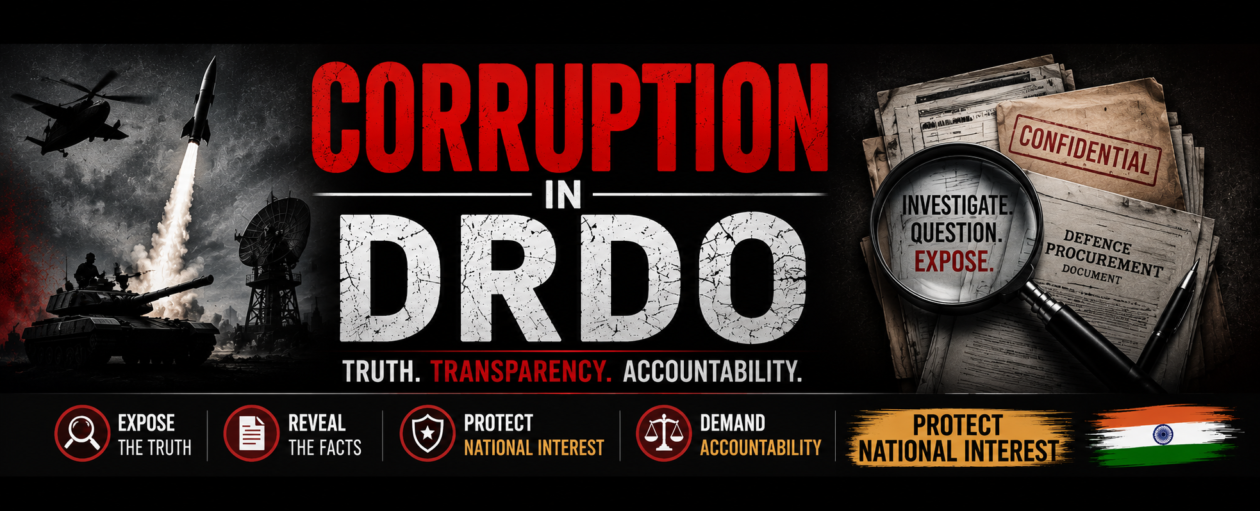
These Rules and all this recent talk of ‘self-regulation’ are of a piece with the government’s overall paranoia of the power of the internet and various whistleblower websites that are coming up (eg, consider the recent case involvingcorruptionindrdo.com). Because there are constitutional safe-guards against censorship, surreptitious measures are being adopted in a number of ways. As Prakash points out:

Mr. Sibal’s latest proposed amendment to the Copyright Act, which is before the Rajya Sabha right now, has a provision called section 52(1)(c) by which anyone can send a notice complaining about infringement of his copyright.  The Internet company will have to remove the content immediately without question, even if the notice is false or malicious.  The sender of false or malicious notices is not penalized. But the Internet company will be penalized if it doesn’t remove the content that has been complained about.  The complaint need not even be shown to be true before the content is removed.  Indeed, anyone can complain about any content, without even having to show that they own the rights to that content.  The government seems to be keen to have the power to remove content from the Internet without following any ‘due process’ or fair procedure.  Indeed, it not only wants to give itself this power, but it is keen on giving all individuals this power.

POSTED BY SUNDEEP ON DEC 15, 2011 AT 22:55 IST