Tag Archives: Defence Research

DNA: Parliamentary committee pulls up DRDO

http://indiareckoner.net/2014/12/dna-parliamentary-committee-pulls-up-drdo/

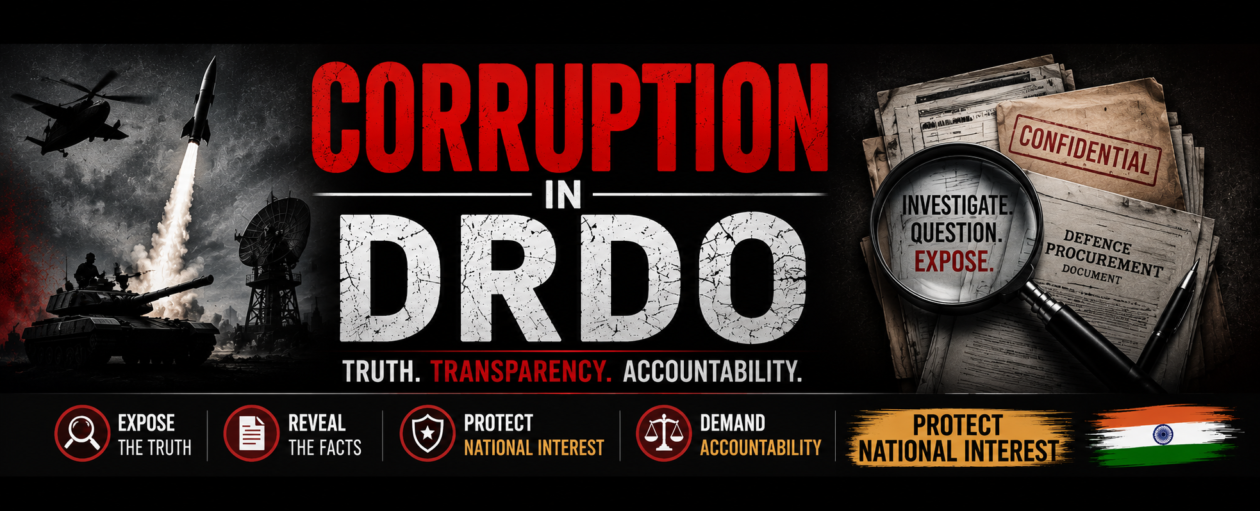
India’s premier defence research organisation, Defence Research and Development Organisation’s inordinate delays, corruption and its fancy for reverse engineering has resulted in Parliamentary standing committee on defence raising the red flag on DRDO budget for 2014-15.

Modi government removes DRDO chief to infuse young talent

IndiaToday.in  New Delhi, November 28, 2014 | UPDATED 18:31 IST

Projects on unmanned reconnaissance aircraft and combat aircraft are underway, but there is a need to evolve a policy for inclusion of such systems into the armed forces, DRDO Director General Dr. Avinash Chander said.

The Narendra Modi government on Friday sacked Dr Avinash Chander as chief of the prestigious Defence Research and Development Organisation, asking him to retire with immediate effect.

Friday was the last day in office for Dr Chander, India’s senior most missile scientist and scientific advisor to the Defence Minister, who was to serve on extension till the end of 2015.

The government order is said to be in line with the Modi government’s policy to avoid extensions to government scientists in order to encourage a younger and fresher profile in the DRDO and other scientific organisations.

Padma Shri Dr Chander, the man behind Agni missiles, was appointed to the two posts in June last year. His research in innovative energy management guidance system formed the backbone of the
The Narendra Modi government on Friday sacked Dr Avinash Chander as chief of the prestigious Defence Research and Development Organisation, asking him to retire with immediate effect.

Friday was the last day in office for Dr Chander, India’s senior most missile scientist and scientific advisor to the Defence Minister, who was to serve on extension till the end of 2015.

The government order is said to be in line with the Modi government’s policy to avoid extensions to government scientists in order to encourage a younger and fresher profile in the DRDO and other scientific organisations.

Padma Shri Dr Chander, the man behind Agni missiles, was appointed to the two posts in June last year. His research in innovative energy management guidance system formed the backbone of the long-range missile system.

Dr Chander joined the DRDO in 1972 after graduating in Electrical Engineering from IIT-Delhi. He later got his MS in Spatial Information Technology from JNTU, Hyderabad. He is a recipient of numerous awards and honours, including DRDO Scientist of the Year and Agni Self-Reliance Award.

Army Tramples on Faulty DRDO Study on Siachen Deployment

By Pradip R Sagar
Published: 02nd Nov 2014 06:06:55 AM The New Indian Express – The Sunday Standard

Vigilant Indian soldier - Siachen
Vigilant Indian soldier – Siachen

NEW DELHI: Prime Minister Narendra Modi’s surprise visit this Diwali to the world’s highest battlefield, Siachen, to applaud the Indian army troops deployed there again brought into national focus the difficulty of operating under such adverse climatic conditions.

A study by Defence Research and Development Organisation, India’s premier defence research institute, to find solutions and shorten the acclimatization period has been junked by the Army.

Keeping unforeseen events in mind, the Army wanted to reduce the pre-acclimatisation training period to faster deploy its troops to high-altitude locations in cases of emergency. And for this, the DRDO was mandated to carry out a study on how to reduce the pre-acclimatisation training period in May 2009 with budget of over `3 crore. Delhi-based Defence Institute of Physiology and Allied Sciences (DIPAS), a wing of DRDO, carried out the study for which they selected 210 soldiers. In order to study the soldiers’ physiology changes, they were asked to stay in a make-shift chamber filled with nitrogen for intermittent periods. But the Army has rubbished the study report and criticised the methods adopted by the DIPAS scientists.

In a strongly worded four-page letter to DIPAS on 10 September, the office of the Director General Armed Forces Medical Services (DGAFMS) has raised serious objections and sought explanation on various key points related to the study including selection of troops for the study, use of multiple investigators to collect data, use of master step test as an indicator of exercise performance for high altitude and disparity in heart rate date from the same cohort at different points of the report.

DIPAS had used intermittent hypoxia study at sea level before dispatching soldiers to high-altitude locations. Explaining the terminology, a DRDO scientist said that Intermittent Hypoxic Training (IHT) is a test protocol usually given to the individual with reduced oxygen concentration as prevailed in high altitude for pre-acclimatising them at sea level in a normobaric hypoxic chamber, before they are deployed for high mountain warfare.

On the basis the outcome of the study, two costly normobaric hypoxic chambers were planned to be set up in Chandigarh to cater northern command and Sukhna for eastern command troops with a cost of over `10 lakh.

Reacting strongly to the samples of troops taken, that had men who had already served in high-altitude postings, the DGAFMS raised concerns on the validity of conclusions drawn from the data presented. While seeking justification for the selection of re-inductees as study subjects, the Army has said, “Current knowledge on the phenomenon of de-acclimatisation is limited. It is accepted by many experts in the field that certain physiological changes induces on exposure on high altitude may persist beyond one month of return to sea level.”

“Hence the choice of re-inductees as study subjects raises questions about the validity of date being presented, especially since the aim of the project is to extrapolate the findings to healthy soldiers being rapidly inducted to high altitude, in all probability, for the first time,” DGAFMC said in his detailed response to DIPAS study.

When contacted, DRDO spokesperson Ravi Gupta refused to comment as it is a classified matter.

MISSILE MISFIRE

22 Sep 2014Hindustan Times (Lucknow)Rahul Singh rahul.singh@hindustantimes.com

DRDO rejects foreign missile for homemade Arjun Mk-2 tank, to work on a new version instead

THE TANK DEVELOPED BY THE DEFENCE RESEARCH AND DEVELOPMENT ORGANISATION (DRDO) IS AN UPGRADED VERSION OF THE MK-1 VARIANT

India drops Israeli-made LAHAT missiles after it fails to meet the army’s requirements, will develop its own missile for Arjun Mk-2 tanks NEW DELHI: The homemade Arjun Mk-2 tank has suffered a major setback, with a critical Israeli anti-tank missile to be fitted on it failing to meet the army’s requirements. The development comes at a time when the defence ministry has set the ball rolling for buying 118 Arjun Mk-2 tanks at a cost of more than ` 6,600 crore.

The tank developed by the Defence Research and Development Organisation (DRDO) is an upgraded version of the Mk-1 variant, 119 of which have been inducted in the army.

One of the most significant upgrades proposed in the new tank is its missile-firing capability.

However, the failure of the laser homing anti-tank (LAHAT) missile, manufactured by the Israeli Aerospace Industries, will seriously hinder the ongoing project as the DRDO will now have to work on an indigenous missile that can be fired from the tank.

In an exclusive interview to HT, DRDO chief Avinash Chander said, “The LAHAT missile doesn’t figure in our plans anymore. We are dropping it. We have been working on a tube-launched anti-tank missile, which hopefully can be configured for the tank’s cannon.”

The Mk-2 variant is supposed to have nearly 80 improved features over the previous version, including more than 15 major technology upgrades.

Chander said the LAHAT missile did not meet the army’s requirements of engaging targets at ranges of less than 1,200 metres. It has an effective range of 6,000 metres.

The major improvements on the new tank include better firepower, integrated explosive reactive armour and countermeasure system, a mine plough, a remotely-operable anti-aircraft weapon, advanced land navigation system and enhanced night vision capabilities.

However, the army may not be able to fully exploit the tank, powered by a German engine, as it is too heavy at 67 tonne.

Supreme Court issues notice to Centre, DRDO

The Hindu – August 17, 2014 02:42 IST

Are defence organisations exempted under RTI?

The Supreme Court has decided to examine whether defence organisations such as the Defence Research and Development Organisation (DRDO) can withhold information regarding transfer of an employee, claiming that they are exempted organisations under the Right to Information Act.

A Bench of Justices Dipak Misra and V. Gopala Gowda issued a notice to the Centre and the DRDO on a petition filed by Dr. Neelam Bhalla, a scientist, who was transferred to a different unit and has sought the reasons for her transfer under the RTI Act. Having failed to get relief before the Central Information Commission and the Delhi High Court, she has moved the apex court.

The petitioner contended that only those information which directly affected and correlated to “intelligence and security” could be exempted and would not apply to information which were general in nature.

She said this petition raised an important question of law as to the interpretation of section 24 of the Right to Information Act, vis–a-vis the exclusion of exempted organisations such as the DRDO. She said citizens were deprived of records relating to their services not being related to corruption and human rights violation.

She said the “wilful disclosure of incorrect or false or misleading information relating to routine matters such as transfer not only to the petitioner but also to higher authorities, namely the Minister of Defence and the National Commission for Women, to justify their actions, was an offence under the newly enacted Whistle Blowers Protection Act.”

She said she was a victim of gender discrimination and humiliation at the hands of senior scientists and in this context, filed a complaint before the NCW inter-alia alleging nepotism and lapses in the policy of recruitment and in particular that her task for the recruitment of scientists ‘B’ was selectively taken away. She prayed for a direction to the authorities to disclose the reasons for her transfer.


Neelam  Bhalla RTI Case
Neelam Bhalla RTI Case

REVEALED: How an Indian missile lay unguarded at South Korean port

Indiatoday.in
IndiaToday.in New Delhi, August 7, 2014

Around 10 months ago, India had showcased its newly developed Pragati tactical surface-to-surface missile at the International Aerospace and Defence Exhibition ADEX-2013 in South Korea.pragati missile

But in a major security lapse, the missile didn’t make its journey back home and lay unguarded, vulnerable and dangerously exposed for an entire month at a South Korean port.
The missile, developed by the Defence Research and Development Organisation (DRDO), has a range of 60-170 km.

India Today has learnt that the Modi government has sounded the code red and decided to investigate the entire matter. The government wants to revisit a never before security scare for India’s missile programme.

Pragati is a highly potent and accurate short-range, battlefield tactical missile system capable of neutralising identified ground targets and providing an effective counter-force weapon system.

It has all weather day and night operational launch capability. It is a counter to Pakistan’s NASR tactical nuclear missile and crucial in maintaining India’s strategic edge over an unpredictable neighbour.

There is a series of violations in the journey of Pragati missile to South Korea.

The first violation is that the Pragati missile sent to South Korea for the exhibition wasn’t a dummy missile but an actual prototype that was to be used for a live firing.
Second, the logistical handling of the missile in South Korea was outsourced to a local agent of Chinese-origin.

Third, the prototype missile missed its ship back to India, stranding it unguarded and vulnerable at the Incheon port for an entire month. Finally, it lumbered back to India as unprotected commercial cargo without the safeguards it needed as sensitive military hardware.

The Pragati missile has quick reaction from command to launch in ripple firing mode of less than five seconds from same launcher. It is capable of carrying various types of conventional warhead of approximately 200 Kg.

The missile system has capability of deployment in stand-alone mode or centralised mode. With its effective and intelligent end trajectory maneuvreing, Pragati defeats detection by any weapon locating radar.


RTI- Cabinet Secretariat – Shri Avinash Chander’s Contractual Appointment

To                                                        1st August 2014
Shri Rajesh Nagpal,
Under Secretary & CPIO,
Cabinet Secretariat,
Rashtrapati Bhawan,
New Delhi-110 004

Hello,

Kindly provide me with the following information requested under the purview of the Right to Information (RTI) Act, 2005 in respect of Para (2) of appointment letter No. I2/9/2013-EO (SM.I) dated 31st May 2013 regarding appointment of Shri Avinash Chander, Distinguished Scientist & Chief Controller Research & Development (Missiles &Strategic Systems), DRDO as Secretary, Department of Defence Research & Development-cum-Director General, Defence Research and Development Organisation and Scientific Adviser to Raksha Mantri for a period of three years. “The appointment of Shri Avinash Chander beyond his date of retirement i.e. 30.1 1.2014, would be on contract basis with the same terms and conditions as he would be entitled to Secretary (DRD) before the date of retirement”.(Copy Annexed)

  1. Provide copy of Contract Agreement between Government of India and Shri Avinash Chander for the reemployment on contract basis during the period 01 Dec 2014 to 31 May 2016.
  2. Provide provisions and rules of Government of India under which Shri Avinash Chander was appointed on contract basis as Secretary, Department of Defence Research & Development-cum-Director General, Defence Research and Development Organisation and Scientific Adviser to Raksha Mantri after his normal retirement and completion of two extensions upto the age of 64 Years.
  3. Whether an official appointed on contract after retirement can function as Head of Office for all administrative & financial matters in the department.(Yes/No)
  4. File noting for appointment of Shri Avinash Chander as Secretary, Department of Defence Research & Development-cum-Director General, Defence Research and Development Organisation and Scientific Adviser to Raksha Mantri.
  5. Whether appointment after age of 64 years violates provisions of FR 56(d). (Yes/No)
Regards
Prabhu  Dandriyal
21-Sunderwala, Raipur, Dehradun
Ph   0135 2787750, Mobile 9411114879,
e-mail id prabhudoon@gmail.com  website   www.corruptionindrdo.com

Registration Number     CABST/R/2014/60302sa-appointment-letter6 CPC HAG Recomguideline of contract appointmentguideline of contract appointment page2guideline of contract appointment page3guideline of contract appointment page4contract appointment agreement page1contract appointment agreement page2contract appointment agreement page3contract appointment agreement page4

Ten key DRDO projects delayed: Arun Jaitley

PTI | Jul 18, 2014, 02.44 PM IST

NEW DELHI: Ten major projects of the Defence Research and Development Organisation (DRDO), including the LCA Tejas aircraft and several key missile programmes, have been delayed due to various reasons, Lok Sabha was informed on Friday.

Giving details of DRDO’s delayed projects, defence minister Arun Jaitley said during Question Hour that “corrective/ remedial” measures are being taken to address the issue of delays.

Besides Light Combat Aircraft, other delayed projects include Naval Light Combat Aircraft, Aero Engine Kaveri, Airborne Early Warning and Control Aircraft and Long Range Surface-to-Air Missile.

The Air-to-Air Missile Astra, Advanced Light Weight Torpedo, Dual Colour Missile Approach Warning System for Fighter Aircraft, among others, have also been delayed, the minister said.

On remedial measures to complete the projects, Jaitley said that consortium approach is being used for design, development and fabrication of critical components.

According to him, synergy and better co-ordination were being promoted among user services, DRDO and production agencies through cluster meetings.

Jaitley also said the general impression that DRDO is lagging behind and that government is not providing enough support “may not be very accurate”.

“It is not fair to say that activities of DRDO have been curtailed by paucity of funds,” he said.

On proposal to allow 49 per cent foreign direct investment in the defence sector, Jaitley said the objective is to bring in best technologies into the country.

The government has decided that now it would be “Indian majority controlled” and it will bring the best technologies in the defence sector, the minister said.

The country has to come out of the situation where India is the largest buyer of defence equipment and ensure that “we have domestic capacity within India”, he noted.

“Government is making all efforts to grant Performance Related Incentive Scheme (PRIS) to DRDO scientists on par with scientists of Department of Atomic Energy (DAE) and Indian Space Research Organisation (ISRO),” Jaitley added.
Arjun scientist probed by CBI

Jul 04, 2014 – PRAMOD KUMAR | New Delhi – The Asian Age
The CBI is investigating graft allegations against a senior scientist associated with the Combat Vehicle Research and Development Establishment (CVRDE Chennai) of the ministry of defence (MoD). The scientist under the scanner was part of a project on the production of India’s main battle tank, Arjun, sources said.
Sources in the agency said, “Initial investigations by the CBI have revealed that the scientist allegedly took a bribe from a private firm for giving a satisfactory report to a company which was developing assembly forged steel track links for the battle tank Arjun during an inspection in 2012.”
The suspected firm was given supply orders by the Defence Ordnance Factory for developing steel track links for the battle tank, they said. Arjun is a third-generation main battle tank developed by the Defence Research and Development Organisation (DRDO) for the Indian Army. It features a 120-mm main rifled gun, one 7.62 mm coaxial machine gun and a 12.7 mm machine gun.
The agency recently registered a preliminary enquiry to probe the allegation against the scientist.
“The agency will soon seek clarifications from the scientist as well as the suspected firm. The agency will also seek clarifications from certain senior officials of the MoD,” sources said.
“If the CBI finds incriminating evidence during the inquiry, it would register a regular case into the matter. Without registering a regular case, the agency does not have the power to call anybody to the CBI headquarters for recording the statement. If the agency decides to convert the PE into a regular case, only then can the CBI send summons to the people. At this point of time, the CBI can only seek clarifications from them,” sources said.
The CBI is also preparing to take assistance of former MoD officials in this case. “Former MoD officials associated with the project may be quizzed to understand the issues related to the case. Besides, the CBI may take the assistance of ordnance factory officials,” sources said.

Arjun tank: CBI probes scientist for taking bribe

Abhishek Sharan, Hindustan Times New Delhi, July 04, 2014
The Central Bureau of Investigation (CBI) has begun a criminal misconduct probe against a senior scientist who was part of a team involved in the development of India’s indigenous main battle tank Arjun, for allegedly seeking and accepting Rs. 1.5 lakh from a machinery supplier.

The agency has lodged a Preliminary Enquiry (PE), according to which the Combat Vehicles Research and Development Establishment (CVRDE) scientist allegedly took the money in September 2012 from the consultant of a private firm supplying a tank component — steel track links— to approve its quality after its inspection by him, said a CBI source.

“The firm had bagged the supply order from the Defence Ordinance Factory for developing assembly-forged steel track links. After the product was ready, the scientist was called for inspection,” said the source. The scientist allegedly asked for a bribe of Rs. 1.5 lakh to “give a satisfactory report”. The source said, “The scientist accepted the bribe, which amounted to criminal misconduct.”

On being contacted, Defence Research and Development Organisation (DRDO)’s spokesperson Ravi Gupta said, “ Let the law take its own course. Let the truth come out.”