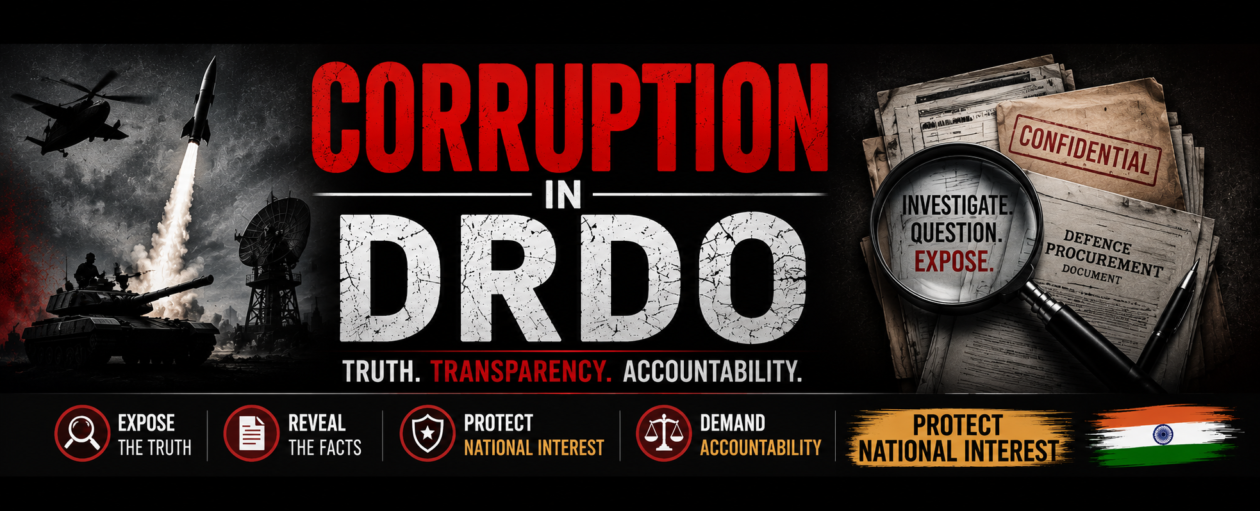
Jugal R Purohit, New Delhi, September 10, 2016 – Indiatoday.in
“We are as surprised as anyone else. If there was an investigation, they should have informed us. This is mentioned in the contract,” said a senior Defence Ministry source.
Rocked by allegations of corruption in its deal with Brazilian aviation firm Embraer, which is under investigation in Brazil and USA, the Ministry of Defence (MoD) responded by saying it had asked for an explanation from the firm over the matter.
“We are as surprised as anyone else. If there was an investigation, they should have informed us. This is mentioned in the contract,” said a senior source.
Defence Minister Manohar Parrikar who was in Goa following his tour to the US had been briefed over the matter and with his concurrence, a communication was being sent at the time of writing this piece. “Within 15 days, they are to respond,” said the source.
On its side, the DRDO and MoD will begin re-examining their files for anomalies it was informed. WHAT HAPPENED
The Airborne Early Warning and Control (AEW&C) System is under-development by the Bengaluru based Centre for Air Borne Systems (CABS) for the Indian Air Force. As a part of the deal, the Brazilian aircraft manufacturer modified its jet aircraft, EMB-145 to carry the Active Array Antenna Unit (AAAU), developed by the DRDO, on the aircraft’s fuselage. A total of three modified EMB-145 aircraft had been developed under this agreement.
The various sub-systems of the AEW&C Mission system were integrated into the ‘modified green’ aircraft by DRDO and the full-fledged EMB-145 based AEW&C tested from 2012. The AEW&C system comprises many sub-systems like Radar and communication links that are being designed and developed by DRDO.
WHAT IS AIRBORNE EARLY WARNING AND CONTROL SYSTEM
As the name suggests, this is a mobile, aerial platform to keep an eye on the enemy for any missile launches or fighter plane launches taking place and responding accordingly. It can also be used as a communications platform to direct own planes and missiles, in response.
As per reports which appeared in the Brazilian press, government agencies in Brazil and USA were looking into Embraer’s business deals. It was reported that the firm had hired the services of a UK-based agent for the Indian sale of EMB 145 plane, an arrangement which is disallowed as per the MoD rules.
The deal was concluded in July 2008. A DRDO release from then stated, “A few EMB-145 based AEW&C/AWACS versions are already in operation with Air Forces of Brazil, Mexico and Greece”.
IMPACT OF ALLEGATION
Surprised, Defence Ministry asks Brazilian firm to explain.
Critical project, IAF is awaiting delivery of three planes from DRDO.
DRDO was keen to export this plane with own radar systems to friendly countries.
Kalyan Ray, New Delhi, May 08,2015, DHNS: The indigenous Tejas light combat aircraft (LCA) will experience a major handicap in defeating the enemy due to non-availability and poor performance of three electronic warfare instruments, developed by Indian agencies.
During the trial, the all-important counter measure dispensing system that protects the aircraft against radar and heat-seeking missiles, could not do its job properly, leaving the jet with poor defence. The system was developed by , Hyderabad-based Bharat Dynamics Limited.
It was not the only faltering system on-board the LCA. The self protection jammer that blocks the enemy radar was too big to be fitted into the Mark-I version of the LCA and the radar warning receiver, which alerts the pilots on hostile enemy signals, perform poorly. Both were developed by Bangaluru-based Defence Avionics Research Establishment.
“LCA Mark-I remains deficient in full electronic warfare capabilities as specified in the Air Staff Requirement (ASR),” the Comptroller and Auditor General (CAG) says in a review report that was tabled in Parliament on Friday.
The aircraft, which achieved initial operational clearances on December 2013, has as many as 53 shortfalls from the specifications drawn in the ASR.
Some of the shortcomings like increased weight, reduced internal fuel capacity, pilot protection from the front and reduced speed are to be addressed in the Mark-II version that was taken up by the Aeronautical Development Agency in 2009 and scheduled for completion in 2018.
Even after 30 years, the LCA could get only the initial operational clearance (IOC) in December 2013. The full operational clearance (FOC) is now targeted in December, 2015.
The cost is also rising all these years. What began as a Rs 560 crore programme in 1983 has now gone up by almost twenty times. The financial package for LCA now stands at Rs 8294 crore.
The auditor also criticised the Defence Ministry for awarding two commercial contracts to Hindustan Aeronautics Limited (HAL) in 2006 and 2010 for delivering 20 fighter planes in each contract in the IOC and FOC configurations respectively to the IAF.
Both were termed premature because in 2006 LCA design was nowhere near finalisation, whereas in 2010 HAL was yet to supply any aircraft to the force as per the previous contract. Even now, the IAF is not in a position to operationalise the LCA squadron in the absence of a trainer aircraft. Moreover, HAL’s production capacity – four aircraft per year – is only half of what the government wants.
DH News Service
Not only that, IAF would be “constrained” to induct the fighter LCA without availability of a trainer model, thereby “adversely impacting pilot training.”
By PTI | 8 May, 2015, 07.40PM IST – The Economic Times NEW DELHI: India’s Tejas Light Combat Aircraft project, in the works for over three decades, came under severe criticism from CAG today as it pointed out that its Mark-I version has 53 “significant shortfalls” which have reduced its operational capabilities as well as survivability.
Not only that, IAF would be “constrained” to induct the fighter LCA without availability of a trainer model, thereby “adversely impacting pilot training”, the audit body said in a report tabled in Parliament.
The CAG noted that it was due to the delay in the manufacture and supply of LCA that IAF had to go for alternative temporary measures such as upgrading its MIG BIS, MiG-29, Jaguar, and Mirage aircraft at a cost of Rs 20,037 crore and revise the phasing out of MiG-21s.
“LCA Mark-I, which achieved Initial Operational Clearance (December, 2013) has significant shortfalls (53 permanent waivers/concessions” in meeting ASR (Air Staff Requirements) as a result of which it will have reduced operational capabilities and reduced survivability, thereby limiting its operational employability when inducted into IAF squadrons,” the report said.
Listing the shortcomings, the CAG said that the LCA Mark- I fails to meet the electronic warfare capabilities sought by IAF as the Self-Protection Jammer could not be fitted on the aircraft due to space constraints.
Also, it said that the Radar Warning Receiver/Counter Measure Dispensing System fitted on the aircraft had raised performance concerns which are yet to be overcome till January this year.
It added that the shortcomings in the Mark-I (increased weight, reduced internal fuel capacity, non-compliance of fuel system protection, pilot protection from front, reduced speed) are expected to be overcome in the Mark-II model.
“LCA Mark-I does not meet the ASR. The deficiencies are now expected to be met in LCA Mark-II by December 2018,” the CAG said.
IAF had proposed in the early 1980s that a new aircraft be developed to replace the MiG-21 fleet, manufactured during 1966 and 1987, after its phasing out in the 1990s.
The project for indigenous design and development of LCA was sanctioned in 1983 at a cost of Rs 560 crore, which was enhanced from time to time up to Rs 10,397.11 crore.
The government in June, 1984, constituted an Aeronautical Development Agency (ADA) as a dedicated institution for the management of the LCA project.
IAF had issued Air Staff Requirement (ASR) in October, 1985, envisaging a light-weight multi-mission fighter with contemporary air combat and offensive air support capabilities and excellent manoeuvrability for close air combat at low and medium altitudes.
The projected requirement was for 220 Light Combat Aircraft (200 Fighters, 20 trainers) to be inducted by 1994.
However, LCA could only achieve Initial Operational Clearance in December, 2013, as against the earlier scheduled date of December, 2005.
The Full Operational Clearance (FOC), which was scheduled to be completed by December, 2008, is now slated to be achieved by December this year although experts said even that could be delayed.
The CAG said that ADA’s decision to advance the building of two prototypes from Full-Scale Engineering Development (FSED) Phase-II to FSED Phase-I so as to utilise its savings on the grounds of accelerating the development process of LCA had failed to yield the desired results.
This, the report said, was because preponed prototypes were deficient in terms of critical onboard systems (Multi- Mode Radar, Self-Protection Jammer, Radar Warning Receiver) and led to ADA using the Limited Series Production (LSP) aircraft (meant for IAF use) towards flight testing/evaluation of these critical on board systems.
“This was in contravention of the Cabinet approval (November, 2001) for phased development of the prototypes in FSED Phase-II after Technical Demonstrators had been built and flight tested for 210 hours,” CAG said.
Talking about lack of trainer aircraft, the audit body said that IAF was in the interim using an upgraded Full Mission Simulator (FMS) at ADA for pilot training, pending supply of an FMS by HAL at the LCA operating base.
It said that the long gestation period led to a change of weapon systems on LCA, necessitating the acquisition of new ones.
The audit body also had a word of appreciation for the ADA, saying its work centres on the indigenous development of the LCA, “which is comparable to many contemporary aircraft in the world”.
CAG said that the manufacturing facilities at HAL cater presently to the production of only four aircraft per annum as against the envisaged requirement of eight due to delays in procuring plant and machinery, tools and also construction of production hangars, which would further impact production of LCA and induction into IAF squadrons.
Repair and Overhaul (ROH) facility for LCA, as specified in the ASR, has not been created fully at HAL, the CAG said.
Of the 344 Line Replaceable Units of LCA, 90 LRUs were considered non-repairable, it said. Of the remaining 254 LRUs, while ROH facilities in respect of 185 were available, the same was yet to be established for 69 LRUs as of January this year, the report added.
The CAG stressed on the need for more efficient management of planning and execution of aircraft development programmes, closer interaction and coordinated efforts among all the stakeholders involved.
It recommended that realistic timelines should be set by MoD while seeking approval for such projects from the government and that the same ..
should be adhered to during their execution with coordinated planning and an effective in-built monitoring mechanism.
“In view of the complexity of the technology involved, while deviating from the approved plan of development, ADA should consult the user (Air HQ) and obtain prior approval of sanctioning authority/ministry for such deviations so as to minimise waivers and concessions at the time of acceptance by the user (IAF),” it said.
The agencies — DRDO, ADA and HAL — should undertake the projects strictly in conformity with the specifications projected by IAF, who should be involved right from the planning stage so as to ensure timely achievement of their requirements.
Indigenisation efforts should be made in coordination with all the agencies involved by having a well-defined indigenisation plan and a clear roadmap for developing a quality product as per the requirement so as to avoid import substitution, it said.
“MoD should award contract to production agency at an appropriate stage of development of a system/equipment in order to avoid the necessity of extending delivery schedule due to a delay in the development of the system, apart from the resultant blocking of funds/inventory and to overcome obsolescence of the components procured by the production agency,” the CAG said.
By Express News Service Published: 28th April 2015 06:00 AM NEW DELHI: Commenting on poor border roads connectivity, a Parliamentary panel has said that in the event of a war, the Army will take more than 24 hours to reach a border area where the Chinese PLA can arrive at in two or three hours. The Standing Committee on Defence, expressing serious concerns over connectivity to Arunachal Pradesh’s Tawang area, hit out at the Border Roads Organisation and asked it to construct good roads, especially on the eastern front facing China, on a priority basis.
The report said the delay in the procurement process had affected the armed forces’ operational preparedness.
The Committee observed that the naval budget had declined from 18.14 percent in 2006-07 to 16.51 percent in 2015-16.
Raising the issue of repeated naval accidents, the panel said the promulgation of the standard operating procedure to check the spurt in accidents was “ineffective”. The panel observed that allocation for the IAF is approximately 70 percent of the projection.
The report also slammed the ministry over the gap between the sanctioned strength of active fighter aircraft squadrons and their actual number.
The report said that the position of expenditure up to the end of February 2015 for the Army, Navy and the IAF is Rs 14,843,37 crore, Rs 18,438.02 crore and Rs 29,682 crore against their revised estimates of Rs 21,933.54 crore, 18,507.07 core and Rs 33,710.68 crore respectively.
Revamp DRDO
The Parliament Panel on Defence has called for a “complete revamp”and reorientation of the Defence Research Development Organistaion DRDO) to allow active participation of the private sector. It stressed on the need for a “complete revamp and reorientation of how the DRDO functions” with a major suggestion being to encourage the active involvement of the private sector, universities, the IITs and IIS. They could play a major role in the resurgence of the DRDO, it added.
The first of the LCAs was handed over to IAF 32 years after the project started.
ABHINANDAN MISHRA New Delhi | 7th Mar 2015
Vital defence projects that have been taken up by the country’s premier Defence Research and Development Organisation (DRDO) over the last several years, do not show any signs of completion despite thousands of crores of taxpayers’ money spent on them.
Defence Minister Manohar Parrikar, while detailing the nine major DRDO projects that have not been able to meet their deadlines, stated in Parliament that Rs 16,708 crore have been spent on these projects that were scheduled to be completed years ago.
Some of these projects, such as the Light Combat Aircraft (LCA), Tejas, Phase II, which was expected to be completed by December 2008, has now been pushed to the end of this month. The government had sanctioned Rs 5,777 crore for this project. The first of the LCAs, which was conceived in 1983, was handed over to the Indian Air Force (IAF) in January this year by Parrikar, 32 years after the project started.
Similarly, the probable date of completion of the Naval Light Combat Aircraft (LCA, Navy) Phase I, which was expected to be completed by March 2010, is under revision. One of the reasons submitted by the Defence Minister for the delay is that “technology challenges have been significantly higher than originally anticipated”. The sanctioned cost of this project is Rs 1,714.98 crore
The probable date of completion of another much talked about project, Aero Engine Kaveri, which was supposed to be completed by December 1996, is also under revision. Sources within DRDO claim that the project, for which the government had sanctioned Rs 2,839 crore, is likely to be shelved
The Air Borne Early Warning & Control (AEW&C) System, for which the government has sanctioned Rs 2,275 crore, is running four years behind the probable date of completion. It was supposed to be handed over to the IAF in October 2011. This has now been postponed to December 2015.
Another crucial project, Long Range Surface-to-Air Missile (LR-SAM), which was allotted Rs 2,606.02 crore is also running four years behind its completion date. It was supposed to be completed by May 2011, but the DRDO has now promised to finish it by December 2015.
The helicopter version third generation anti tank guided missile, whose promised date of completion was December 2010, is now expected to be completed by January 2018. Air-to-air missile Astra too is running four years behind its scheduled date of completion and is expected to be ready by December 2016.
The project on the dual colour missile approach warning system for fighter aircraft and advanced lightweight torpedo, which were to be completed by the DRDO in 2013, are now likely to be executed by the latter part of 2015. For the financial year 2013-14, a total of Rs 10,610.17 crore was allocated to DRDO, of which Rs 5,552.57 crore was in revenue and Rs 5,057.60 crore was in capital.
A senior official with the DRDO stated that the “culture” of promoting scientists who are unable to complete their projects on time, instead of reprimanding them is a big factor behind the delays that have become synonymous with DRDO.
“The practice of seeking extensions for a project, one after another, has been condoned by successive Defence Ministers. Why would a scientist want to complete his project on time if he knows that even if he does not complete it on time, the project will be extended and he will continue to work on the same project? Scientists who retire are given extensions because they have been working on a project, so they would naturally want the project to go on and on,” the official stated.
According to Parrikar, the government has taken many corrective measures to complete the ongoing projects on time like three-tier project monitoring and constituting a Project Monitoring Review Committee (PMRC). However, DRDO officials claimed that he was only repeating what has been said by Defence Ministers who came before him.
“Consortium approach, three-tier project monitoring approach, Project Monitoring Review Committee (PMRC) and Project Appraisal and Review Committee (PARC) have been there in the DRDO for the last 10-15 years. There is no new remedy which Parrikar has tried to suggest,” the official claimed.
Defence Minister Manohar Parrikar, while detailing the delay in nine major DRDO projects vide Parliament question No 789 by Hon MP Nishikant Dubey from BJP and answered on 27 Feb 2015. As Per annexure ‘A; serial No 3 Aero Engine Kaveri, DRDo answer was technical bla bla the real delay reason the incompetent, corrupt, immoral scientist led the project.
Mr. T Mohan Rao, Director GTRE who was picked up by the Karnataka police during a raid on a high-end spa cum-massage parlour in Jaya-mahal on 11th May 2011 at 11 PM with the Mr V N Narayan, Agent Israeli firm ILN Technologies Inc.
T Mohana Rao is Director of the Gas Turbine Research institute (GTRE), a DRDO wing involved in the manufacture of Kaveri, India’s first indigenous jet engine for LCA Tejas. According to the police, Mohana Rao had claimed at the time of the arrest, “I have come to fix an appointment for
my wife for tomorrow.” Mohana Rao also allegedly lied to the police that he was a consultant with aeronautics space research and was a resident of Vimanapura in HAL. In 2008, Mohana
Rao and the GTRE team were awarded the Dr V M Ghatge national award for his outstanding contribution in the field of aerospace technology. Mohana Rao is also chairperson of the Bangalore branch of Aeronautical Society of India and the Chairperson of the township advisory committee of C V Raman Nagar, where most DRDO personnel live.
This is the tip of Ice the berg, Sh Avinash Chander down fall because of his immoral act to made Ms Tessy Thamos firstly Distinguished scientist ignoring lot of deserving scientists and after that made him Director, ASL again ignoring deserve candidates and finally made her husband CMDR S K Patel incompetent man recruited and appointed as director QRS violated all norms.
These types of cases are real reasons of
delaying in DRDO mission oriented projects.
29 Jun, 2014, 1430 hrs IST, PTI DRDO’s claim about being in a position toexport Light Combat Aircraft Tejas has been dismissed as premature and unrealistic by former top IAF officers.
NEW DELHI: DRDO’s claim about being in a position to export Light Combat Aircraft Tejas has been dismissed as premature and unrealistic by former top IAF officers, who want it to focus on getting the indigenous fighter plane inducted into own air force first.
“It is good to have ambitions but there are several miles to go before we can talk or think about exporting LCA.
“It is too early to talk about this as it has to be fist inducted into IAF before we take a decision on selling these planes,” former IAF chief Air Chief Marshal S Krishnaswamy said.
He was reacting to DRDO’s claim that it can sell light-weight multirole LCA to friendly foreign countries in future.
Krishnaswamy said DRDO and the country will have to be “realistic” as for exporting the aircraft. The country will have to make huge investments to create a new and big production line for mass production of these aircraft, he said.
The development of the home-grown fighter aircraft, which recently got ‘Initial Operational Clearance’ by IAF, has already taken 30 years at an estimated cost of over Rs 17,000 crore.
However, the induction is still awaited as IAF has not yet given the ‘Final Operation Clearance’. Production of the aircraft is estimated to push up the cost further.
Krishnaswamy said when it comes to exporting combat aircraft or helicopters, the seller has to provide long-term fleet support to the customer countries and “DRDO has no exposure to such fleet management practices”.
“We had exported some choppers to a country and one of them crashed during the national day parade of that particular nation.
“So, we should first focus on developing the aircraft for our own requirements and then think of other things,” he said.
Krishnaswamy said the first indigenously built bomber HF-24 Marut aircraft had to go through several modifications due to problems experienced in it even several years after it was inducted in IAF.
HYDERABAD: The joint venture between India’s Defence Research and Development Organization (DRDO) and Israeli Aerospace Industry to manufacture Long Range Surface-to-Air Missile (LR SAM) and Medium Range Surface-to-Air Missile (MR-SAM) has turned out to be a non-starter.
The long range missiles were to have been delivered to the Indian Navy by 2012 while the medium range missiles should be in the Indian Air Force weaponry by 2017. However, both the delivery schedules are way behind schedule and show no signs of meeting them even in the near future.DRDO officials are blaming the lack of progress in the joint venture due to lack of transparency and non-transfer of technology by their Israeli counterparts. And the recent trials that were conducted by the Indian defence organization failed to meet the standards of both the IAF and the Indian Navy. The entire cost of Rs 12,500 crore of the joint venture is being funded by India and the inordinate delay and lack of progress in the project has turned into a big cause of worry in the defence ministry.
According to sources, the LR-SAMs project was commissioned in 2006 and the delivery of the missiles to the Indian Navy should have happened by 2012. Similarly, the MR-SAM venture was signed in 2009 and the missiles are to be delivered to the Indian Air Force by 2017. Both both the projects are way behind schedule and show no signs of making progress.
“Frankly speaking, right now, not much is going on in the joint venture due to various issues between the two sides. Expecting Israel to share its technology with India is unfair. But such things should have been clarified before the joint venture was entered into,” said an official.
DRDO is maintaining that it is because of the lack of transfer of technology that the trials conducted so far have ended up as failures. “Industries are merely getting the drawings as to how to produce certain systems and such things are leading to deviations from the laid down specifications because the knowledge to develop the systems is not being imparted,” said sources.
DRDO officials are also attributing the delay to a complicated and long procedure involving shuttling between India and Israel for various stages of development of a system etc. The Hyderabad-based Indian defence organization also reportedly found itself helpless on problems in propulsion system and other related issues while a significant number of parts or systems are yet to be tested following a delay in manufacturing.
However, when quizzed on the issue, DRDO Director General Avinash Chander told the TOI that nothing was amiss. “Everything is going on as per the plan and development trials are on. We shall be able to deliver the MR-SAMs as per schedule. Right now, the contribution from India in the joint venture project is about 20% and would ultimately reach 80% in the final stages.” Regarding the already delayed LR-SAM, DRDO officials declined to come on record.
MR-SAM, one of the major demands of the forces, is to have a range of 70 kms or so, and the IAF is banking on replacing its ageing Soviet-made Pechora SAM missiles with the MR-SAMs. But nobody is sure how long the wait is going to be, and whether the delivery will take place at all.
The Light Combat Aircraft is perhaps the most ambitious of all DRDO projects. But 17 years and four postponements of its test flight later, the multi-role fighter meant to replace the MiG-21 is still a dream.
What has happened to the LCA, the most technologically complex challenge that DRDO had taken up? Air force officers, DRDO scientists and defence experts say it remains grounded because of “scores of technical problems.”
The delay has hurt the air force badly and dented the DRDO’s image. A country that has not designed a jet fighter in decades had been waiting long for one. India had designed and produced the HF-24 aircraft in the early 1960s, but its engine was British.
Such was the enthusiasm behind the LCA that in 1985 the then prime minister Rajiv Gandhi showcased it as a symbol of the new era of co-operation and friendship between India and the United States. Gandhi even overrode the claims of the French and Germans who had been collaborating with DRDO and the Bangalore-based Hindustan Aeronautical Limited for the LCA production.
The original deadline to fly the aircraft was 1993. The cost, Rs 5.6 billion. The DRDO and HAL did roll out an LCA in the presence of then prime minister P V Narasimha Rao on November 17, 1995. DRDO top brass then announced that the maiden flight would take place in early 1997. The dates were revised to June 1998 and then to February 1999.
Years passed by, but no test flight took place. Today the deadline for the LCA has become a joke in defence circles.
The most scathing criticism of the project came from the Comptroller and Auditor General of India who, in his 1999 report, said: ‘Even at the end of 1998, the LCA had not crossed the development stage. Its production and induction into the air force remains only a distant possibility.’
The CAG report went on to add that the airframe for LCA developed by the DRDO’s Bangalore laboratory, the Aeronautical Development Agency ‘is deficient in vital parameters of aerodynamic configuration, volume and most importantly, the weight.’
The first phase of the project consumed Rs 25 billion, overshooting the estimated Rs 5.6 billion. Worse, due to the delay, the air force was compelled to upgrade its MiG Bis aircraft at a cost of Rs 21.35 billion.
Scientists at DRDO, ADA and HAL concede one thing: the LCA has run into some serious technical problems. LCA is a meticulous fly-by-wire aircraft, which is critically dependent on software to fly.
“But over the years, we have not been successful in fully testing the software. Therefore, we face difficulties in integrating the system,” admits an engineer at HAL.
Since the aircraft depends on computers, no pilot wants to risk a flight test without thoroughly validating the system. Scientists say the trials intended to test the dynamic stability of the airframe and the LCA’s engine-flight control system has been successful. Though the engine and the electronics are in the advanced test mode, the aircraft’s ability to withstand low pressure and temperature at high altitudes is suspect.
“There is reason enough to worry that the LCA will not take off in the near future,” says Bangalore-based aviation expert P N Srivastava.
“I feel the delay is primarily due to the fact that it took years for a country like India to get the advanced technology for the project,” he says. “The idea for LCA was born without having any requisite technology on our side,” Srivastava points out.
DRDO officials put forward one reason for the project delay — sanctions from the United States after the Pokhran nuclear blasts. In a bid to force India to put the nuclear genie back into the bottle, the US has pulled out of the project soon after the tests.
Thus, just one week after the explosions in May 1998, many scientists working on different fields linked to the LCA at aerospace giant Lockheed Martin in Binghamton, New York, were asked to pack their bags for India by the United States. The Indian engineers were working to validate a computerised control law software for onboard computers which will ultimately fly the aircraft.
As it imposed sanctions, the US also denied key components like hydraulic actuators — that help manoeuvre the aircraft, gain altitude and determine the trajectory — and the ring-laser gyros to make inertial navigation systems.
“One of the main reasons for the delay is that technological sanctions from the US hit us badly. Had it not been for the nuclear blasts, our deadline to test fly the aircraft would have been successful in December 1998,” says a senior DRDO official.
Lockheed Martin refused to give the DRDO the flight control computer, which was in the US for testing, when sanctions were announced, he added.
Another major hurdle for DRDO is the LCA’s engine. As per its agreement with the US, India was allowed to purchase frontline 404 engines from General Electric. In fact, DRDO imported 11 such engines and fitted them on to the early versions of the aircraft, pending the development of the indigenous Kaveri engine being developed by Bangalore’s Gas Turbine Research Establishment.
But after the nuclear tests, GE withdrew its technical support personnel from India and DRDO was forced to depend only on Kaveri. Sources now say it will take at least two years to determine whether Kaveri engines can withstand the low pressure and temperature at high altitudes.
No one at DRDO, ADA and HAL believes that the LCA will fly before 2005.
Experts say the delay should be examined in the context of a country that has not designed and produced a jet fighter since the 1960s. Development of every vital component of the LCA — airframe, multimode radar, flight control system, Kaveri engine, digital electronic engine control – are said to be beset with problems.
Scientists at DRDO, for their part, hold the defence ministry partially responsible for the delay. Between 1990 and 1994, all work came to a virtual standstill as the defence ministry refused to release the much-needed foreign exchange because of economic stringency.
But the biggest worry for DRDO is not the bureaucratic delays and sanctions, but the Indian air force. Faced with diminishing number of its ageing fleet, the IAF holds DRDO responsible for promising to deliver the LCA before year 2,000, thereby considerably upsetting many of its aircraft acquisition plans.
Suspecting that DRDO will never deliver the LCA, the IAF has now embarked on an ambitious project to upgrade 100 MiG-21 aircraft.
Despite the heavy odds, DRDO still remains confident that it will roll out the country’s first indigenous aircraft before 2002.
“We will induct 200 LCAs into the Indian Air Force between 2003 and 2010,” Dr Abdul Kalam told a group of aeronautical scientists before he handed over DRDO’s charges to Dr Vasudev K Aatre.
But there aren’t many who believe that promise will be fulfilled.
Antony told the country’s premier government-run organisation responsible for manufacturing defence equipment that it should adhere to the timelines and satisfy the user.
NEW DELHI: Reflecting frustration over long delays of strategic projects like Light Combat Aircraft (LCA), defence minister A K Antony came down hard on DRDO, saying there is a “limit to time slippages” and that it should “perform or perish”.
Antony told the country’s premier government-run organisation responsible for manufacturing defence equipment that it should adhere to the timelines and satisfy the user.
He specifically referred to the LCA project, which has not fructified even after nearly three decades of inception, and said, “I am waiting that the LCA should become a reality.”
The defence minister said in military development projects across the globe, it is a “herculean task” to meet timelines and there are time slippages. “But there is limit for slippages,” he said, clearly reflecting the frustration.
“In the times of cut-throat competition, the choice is very clear, perform or perish. In delivery of strategic systems, timelines must be adhered to and the satisfaction of the user is the litmus test,” Antony said at a DRDO awards function.
Asking the DRDO to focus on its core competence and “not fritter away its resources and energy”, he said, “Do not think that I am criticising you, I am with you in all times but as the minister of defence, it is my duty to say some things to you.”
On the LCA programme, he said he had been given a particular date by the DRDO. “I hope that it is the final date and the aircraft gets its Initial Operational Clearance II.”
The IOC-I of the LCA was held in January 2011 in Bangalore and its IOC-II was scheduled to be held in July but it has now been postponed to be held in November.
Antony asked the team of HAL, DRDO and the IAF to work together on the LCA project and ensure that it achieves the IOC-II and then the final operational clearance by the end of next year.
The Indian Air Force has been clever over the years in a petty sort of way. Short-range or medium-range combat aircraft and so on are uniquely IAF nomenclature; no other Air Force has such categories. In the age of aerial tankers, describing warplanes by their radii of action is a distraction.
Forty years ago the IAF invented another category of warplanes — “deep penetration and strike aircraft”, which permitted the purchase of Jaguar. The IAF sees this sort of thing as a harmless ruse to serve its interest.
The multiplicity of combat aircraft thus procured allows, the service believes, in a crisis to at least have some squadrons in its fleet not subject to sanctions or the spares-and-servicing tourniquet, which supplier countries in greater or lesser measure always apply, depending on their foreign policy goals and national interests of the moment, and which tool of manipulation is now legitimated by the recent Arms Trade Treaty.
This policy of buying aircraft from diverse sources was first articulated in a 2006 note from Air Headquarters (AHQ) to the ministry of defence (MoD), which stated that the requirement for a sub-30-ton fully loaded combat aircraft was being deliberately proposed to escape the Russian stranglehold, and avoid going in for more Sukhoi-30 MKIs or the upgraded variant the “Super” Sukhois. Thus, Rafale passed the spurious test, clocking in at 27 tons. Of course, the IAF-invented range-dictated categories serve another purpose. They confuse generalist civil servants in the MoD and convincing clueless politicians that there are big gaps in combat aircraft numbers which need filling.
In this game of “fool you, fool me”, where the IAF is being jerked around by supplier countries, the threat to national security stays unaddressed. IAF is principally to blame, of course. But the inability of the Aeronautical Development Agency (ADA) and other Defence Research and Development Organisation (DRDO) units tasked with aircraft and on-board systems designs, and the sheer incompetence of Hindustan Aeronautics Ltd (HAL) are equally responsible.
So criminally negligent has HAL been that in all the years it assembled a variety of MiG-21s, MiG-27s, MiG-29s, and the Jaguar, and the power plants for each of these aircraft at its Koraput factory, it failed to maintain a database. In other words, for all the licence manufacturing it has done over the years, by failing to compile how every component in the aircraft and in the engines does what and how, it has learnt nothing.
Had HAL maintained a database of all the items it has put together, the country by now would have had the built-up capability to manufacture the Tejas Mk-I and Mk-II on the run. But this defence public sector unit has reduced itself to an adjunct of supplier companies. That top HAL leadership has not been brought to account on this score and that the Indian taxpayer continues funding such profligacy only reflects the state of things.
DRDO, on its part, has prospered by creating illusion. Other than in certain areas, such as in writing sophisticated software and devising complex algorithms to drive military systems, DRDO projects are mostly scams. Behind every project that’s touted for realising “self-sufficiency” lies imported technology in some guise. In fact, it has been so grossly inept in not insisting on total transfer of technology from its partners that foreign defence firms happily strike deals in which Indian monies fund the development of state-of-the-art technology in other countries but get nothing out of it except finished high-cost products.
It is not the fault of the supplier firms that DRDO has proved so inattentive, gullible, and plain reckless with public monies. Take for example the advanced medium-range and long-range missile systems supposedly being collaboratively developed with Israel. Except in striking a contract for `15,000 crore, DRDO settled for only a work-share arrangement and that too to fabricate the low-value backend of these missile systems, with the Israeli company retaining the intellectual property rights on all the technology so developed.
A similar deal for a short-range missile system with Dassault Aviation has just been signed and another `30,000 crore is consequently going down the drain. Because in this business suckers are not given an even chance, the foreign companies can hardly be blamed for exploiting DRDO’s unwillingness to leverage India’s financial subsidy to obtain full proprietary and production rights for all technologies generated in such projects. So what is the department of defence finance doing other than sleeping on the job?
If DRDO brass were to be hauled up, it would be like pulling out a foundational stone that could bring the whole fraudulent public sector defence industrial edifice that, notwithstanding its claims, has produced no original technology after the Marut HF-24 in the 1970s, tumbling down. It is the reason why the Naresh Chandra Committee’s recommendation that the offices of scientific adviser to defence minister, head of DRDO, and secretary defence R&D be separated, may never get implemented. There are too many vested interests in the armed services, DRDO, and DPSUs who have it good to want this situation to change.
Coming back to Rafale, had Reliance Aerospace gone about it the right way it could have emulated Larsen & Tubro (L&T), which has indigenously developed the engineering, tooling, and manufacturing capability to locally produce everything from nuclear-powered and conventional submarines of any design to artillery systems. This proactive attitude to build up its all-round capability means it is in a position to benefit from “transfer of technology” portions of deals for high-value weapons platforms India has signed in the past two decades, and very quickly to absorb foreign technologies India pays for but which, owing to the complete inability and incompetence of defence public sector units, has to-date not capitalised on. We are talking cumulatively of waste now reaching the thousand billion dollar-level.
If the L&T business model is too onerous, Reliance Aerospace, instead of turning itself into a mere cog in the Dassault Aviation machine by channelling payoffs to the right quarters in the ruling party to lubricate the Rafale deal, could have tried to buy off large chunks of the Rafale-maker, Dassault Aviation itself, as the Tatas have done by purchasing the South African company Denel’s entire 155mm/52 calibre Howitzer line. That might have been the second-best strategy to become a commercially viable defence production entity in double-quick time and do right by the country as well.
The writer is a professor at the Centre for Policy Research, New Delhi
Comments
by Air Cmde Raghub… (not verified) on Fri, 2013-04-26 22:43
Zero sum Game.Only history will tell whether DRDO has been zero or hero. Import of even obsolescent BMD would have cost us fortune which DRDO has been able to save. Calling Names.. If IAF has managed to get its magnificent flying machines from diverse sources instead of all from Russia without love-it has been smart move by them for which they need to be lauded? Jaguars & Mirages have served us well as Canberra’s & Hunters did? HAL & ADA. The two are incomparable and class apart. While HAL has hardly picked up any worthwhile aviation technology during its half a century of assembling MiG’s & missiles in its sprawling MiG complexes- ADA has developed fourth generation plus Tejas. Flight testing & overcoming problems during development takes time but rewarding eventually. Successes as Scams? It is much easier to call a success a scam than calling a spade a spade. If DRDO has made use of some imported technology where is the problem? Most of the defence technologies are copied all over the world sans any qualms or copyright compulsions.155×52 or Desi Bofors will be copy work of some technologies. Russian K-13A air to air missile was true copy of the the US Sidewinder-without being a scam. Missiles. The learned author can rest assured that no short, medium or long range missiles can take India for a ride in any missile deal till Dr VK Saraswat is around. A scientist who has successfully lead us to the ICBM regime must have seen some technology benefit in these collaborations.
by MVP (not verified) on Sat, 2013-04-27 17:57
The so called DRDO Scientists are busy playing Golf in the DRDO Phase-II Township Golf Course, Bangalore. Unlike the soldiers, risking their lives in difficult terrains, a majority of these scientists enjoy their entire life (doing very little official work) in splendid townships, utilising CSD facilities, many festival holidays, discussing (obviously during office hours) and buying /investing in plots of land, flats etc. without concern to build good quality weapons at the shortest possible time. They do research(at tax payers expense) without any urgency to complete the tasks with an end result in mind. They should be made accountable for each and every pie of tax payers money. In case of not meeting the deadline, the scientists should be asked to reimburse back to the Govt. of India 50% of the salary drawn.
Appeal to clean DRDO of corrupt and anti-national officials