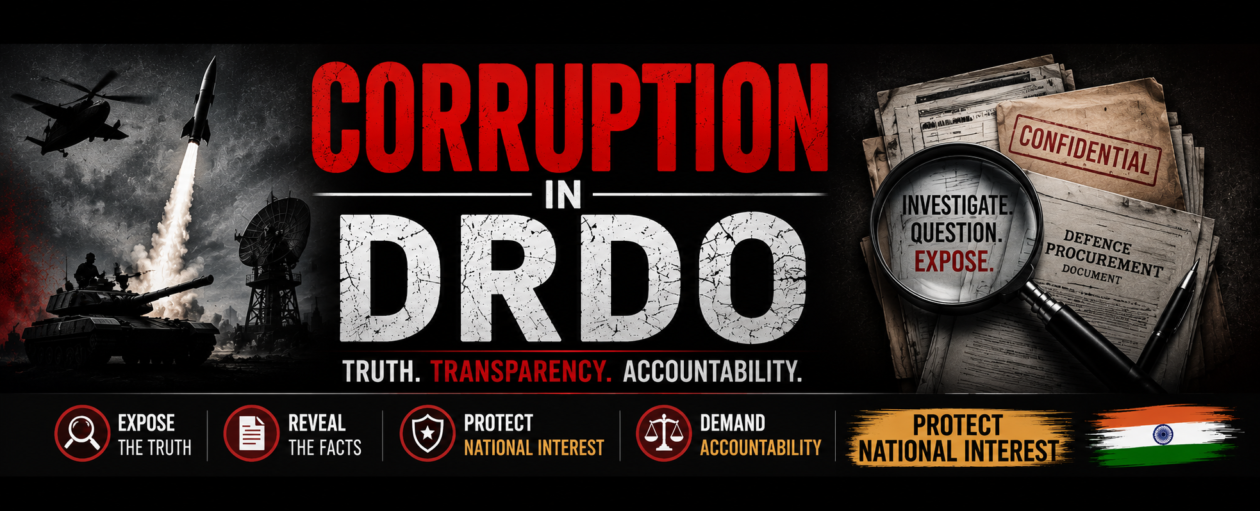
Tag Archives: NAG

PM scraps DRDO’s ‘retirement benefits’ committee

ABHINANDAN MISHRA New Delhi | 20th Sep 2014 – The Sunday Gaurdian
Prime Minister Narendra Modi has decided to scrap the Departmental Peer Review Committee (DPRCs) of the Defence Research Development Organisation (DRDO) in an attempt to revamp the outfit. The main job of this committee of DRDO scientists is to grant extensions to fellow scientists. The committee has come under scrutiny after complaints that all that these scientists do is to park retiring and retired colleagues in important posts year after year. “The PM has ordered the scrapping of the committee that reviews cases to grant extension of service to scientists who are superannuating. Giving repeated extensions to scientists, whose capabilities could be questioned, is one of the major problems with the DRDO,” a DRDO official said.sunday gaurdians clip

Sources said that 15 top scientists in DRDO, including Director General (DG) Avinash Chander, are on extension. After getting two extensions, Chander is now on contract. “What should have been an exception, has become a norm here. Every year, six to eight senior people in DRDO get extensions. This has led to an alarming attrition rate in the organisation,” said a scientist who has been working with DRDO for the last 12 years. In the seven years between 2007 and 2013, at least 687 scientists left the organisation, which comes to a rate of 100 scientists leaving the organisation every year.

The DRDO, best known for missing manufacturing deadlines, is gearing up for a hard time after PM Modi told its scientists and officials that their lackadaisical approach would not be tolerated anymore. Last month, while addressing the annual award function of the organisation in the national capital, the PM expressed his unhappiness over the way things were working in the organisation.

“The Prime Minister is clearly unhappy with the way the DRDO has been functioning, as most of our projects are running years behind schedule, resulting in cost overruns and compromising of national security. During the event, he made sure that that senior officials were made aware of his views on the subject and the fact that such lackadaisical approach would not work anymore. With the government approving 49% FDI in defence, we need to start performing now,” said a senior DRDO official. Modi, while commenting on DRDO said that the organisation “should not say in 2014 that a project conceived in 1992 will take some more time”.

DRDO, founded in 1958, has a network of 54 laboratories, employs close to 35,000 employees including 7,500 scientists. In July this year, the BJP-led NDA government increased DRDO’s budget from Rs 5,985 crore — as provided by the UPA’s interim Budget in February — to Rs 9,298 crore, the largest ever increase in the organisation’s history.

However, despite being treated with extreme care by successive governments, DRDO has still not been able to shake off the negative image associated with it. Most of its projects, ranging from Tejas light combat aircraft and long-range surface-to-air missile systems to NAG missiles are running years behind schedule.

According to officials, at least ten major projects that are being worked on by the DRDO have exceeded their stipulated date. “The major ones among these are the light combat aircraft, naval light combat aircraft, aero engine Kaveri, airborne early warning and control aircraft, long range surface-to-air missile, air-to-air missile Astra, advanced lightweight torpedo, dual colour missile approach warning system for fighter aircraft. If you include the minor ones, like the NAG missile system, then the number of incomplete projects will become even more,” the official stated.

According to a former bureaucrat, who had worked in the Ministry of Defence, the government has been always generous when it came to funding the DRDO. “The DRDO has never suffered from any paucity of funds. The main problem with the organisation is at the top. No accountability is fixed on them. There is no other place where you will find senior officials being given repeated extensions despite doing nothing.”

The former bureaucrat added that he had come across instances where the country’s defence preparedness suffered because the DRDO first made a commitment that it would manufacture the product, but when the deadline arrived, it did not have the product. And in cases where the product was there, the quality was not acceptable. “It is a shame that due to DRDO’s inefficiency the country has to import more than half of its defence requirements,” he said.

Even the Comptroller and Auditor General (CAG) has time and again come down heavily on the DRDO. “Year after year, the CAG has revealed the kind of mismanagement that has been happening in the DRDO. In February this year, CAG audits revealed that the DRDO spent Rs 52 crore to buy a cooling substance, which was to be used in the NAG missile system in 2007. The interesting part is that the NAG was not operational at the time and it is still not operational. Can you expect such kind of mismanagement from any other defence organisation in the world elsewhere?” an official with the DRDO said.

According to him, the onus of revamping the DRDO is with the Defence Minister. “The DRDO officials and the defence ministry bureaucrats will not take the bull by the horn; no one wants to disturb the status quo. It is the Defence Minister who needs to do it. The minister needs to implement the recommendation of the first-ever external review report of the DRDO, which was prepared by an independent committee of experts headed by P. Rama Rao, former secretary, Department of Science & Technology, and former ISRO man Dr Brahm Prakash. It had recommended a massive restructuring of the 50-year-old body to make it more effective,” the official said.

However, Ravi Kumar Gupta, Director, Directorate of Public Interface, DRDO, said that the PM was very appreciative of the work being done by the organisation during his interaction with the officials last month. “He has positive views about the organisation and said that the organisation had a lot of potential and whatever we were doing, we were doing it in a professional way. He also said that just as it holds true for any other organisation, we too should not lose focus and follow the chalta hai attitude,” Gupta said.

Invite white paper on DRDO’s current scenario

To                                                                                                             14th August 2014
Sh. Narendra Modi,
Prime Minister,
Room No – 152, PMO,
South Block, NEW DELHI -110011

Subject: Invite white paper on DRDO’s current scenario.

Honorable Sir,

I have to submit following points for rejuvenate DRDO and give moral boost to real honest scientific work force for fruitful and meaningful system/ arms development for end application in three services.

  1. DRDO since its inception was committed to assist the active services and the defence production agency in modernization of front line technologies.
  2. Until 1980 the organization followed its road map which was evolved by Dr Kothari the then front line technologies to PM. Since then we fought three successive war with our neighbors and requirements of three services increased   many fold as they had to secure our borders from external threats,
  3. The demand on DRDO increased therefore, 52 defence R&D labs scattered across the India were established in phased manner. Primary importance was given to the development of long/short range missiles, tank equaling to world class technology, light combat aircraft, nuclear powered submarine, kilo class of warships.
  4. With foregoing objectives government of India in 1980 when Smt Indira Gandhi returned to power declared DRDO an integral part of defence working under secretary, DR&D, DG, DRDO and Scientific Adviser to Raksha Mantri. (the three combined post to be hold by single person)
  5. Simultaneously the annual budget of DRDO from Rs 64 crores was raised to 1100 crores in particular for establishing modern infrastructures and accelerates indigenous technology development of arms and ammunitions.
  6.  The enhanced fund and absolute power to SA to RM without accountability derailed the road map laid by Dr. Kothari the then adviser to PM. Prior to this the post of SA to RM was honorary post
  7.  Grabbing land in the name of defence and construction of buildings disproportionate to manpower was the prime work of DRDO top bosses after mid 1980’s. Since the omission commission is hefty every DRDO top officials focused upon the infrastructure development without justified the requirements or create fake requirement in the name of ongoing projects and this being continue till date. Annual maintainace and repairs of these unused infrastructures gulps the major chunk of DRDO annual budget.
  8. Presently in DRDO 99% officials are engaged with procurement cases and look for its completion on 31st march every year, however, they have forgotten the development of frontline technologies and some of the projects/ programs under taken in early 70’s which were suppose to completed by not later than 5 years from the date of sanction is still incomplete after 40 years the notable example are Arjun tank, GTX engine, Tejas, Nag, Akash, Trishul missiles etc.
  9. Due to weak government at the center nobody question the authenticity of prolong time taken for development of arms/ ammunitions etc.
  10. While successive SA to RM were able to justify the failures  and where the centre rewarded those with Padama Awards, such erroneous decisions encouraged the incompetency in DRDO and at one time before the Kargil War SA to RM authenticated the conceptual proving of the arms than the development of prototype. The justification was that “ we are 100 crores people nobody can attack on us
  11. Immediately India witnessed the Kargil conflict in 1999 where the General Malik said “casualties in the conflict could have been reduced had the Defence Research & Development Organisation (DRDO) not come in the way
  12. With this poor show of DRDO during Kagil war the then PM expressed unhappiness with then SA to RM and said “ अपना घर संभालिये सब कुछ ठीक नहीं चल रहा है
  13. Today the condition is that the DRDO procurement policy 2006 duly approved by finance ministry is violated by top DRDO officials (SA to RM, Directors, Program Directors etc.) by splitting the orders to make them within their sanction power. Compromising the quality, favors to vendor by customizing specifications, managed foreign visits with help of suppliers all this result at the end short closing of the project without deliverable output.
  14. Now annually DRDO consuming not less than Rs 10000 crores but ultimate looser is country with poor tax payers. “DRDO has become social commitment” Former PM Sh VP Singh said in 2nd DRDO Director’s conference at Bangalore.

Honorable Sir,

A white paper may please be sought from DRDO and it should be made public so that 49% FDI in defence sector could be justified.

Following points to be justified

  1. Total asset of DRDO
  2. Annual Budget
  3. Lab wise manpower vis -a -vis Project/Programs (it will give the clear picture of delays in output)
  4. Products developed and its production and deployments in services for each lab (it will prove the worthiness of Lab)
  5.  Awards – vis a vis output of awardees
  6. Incentives given on product development ( this will expose the real talent)
  7. Patents – Granted/ applied
  8. Man power planned and its proportionate buildup accommodation lab wise
  9. Total cost of abandon equipments lab wise
  10. Statistical failure data analyzing and corrective measure for deployed project like LCA/Arjun Tank/Arihant/various Missiles.

Sir, this is a honest approach to clean DRDO from corruption as you said in Kargil  “Corruption is the worst plague that has ruined the country. Once it is rooted out, we will sail on the path of development smoothly,”

 
Regards
  
Prabhu Dandriyal
21-Sunderwala, Raipur
Dehradun-248008
Phone 0135- 2787750, Mobile- 9411114879,
e-mail id prabhudoon@gmail.com, website 
www.corruptionindrdo.com

Every fortnight launching a missile – hidden agenda of DRDO

Sh. Narendra Modi ji, Honorable Prime Minister when asked about Indo-Pak relations he said “Talks get lost in the noise of bomb blasts.” It was a simple and effective way to convey the message to our neighbor.

Since 1999, when DRDO credentials were on stake due to the exposure of its strength in KARGIL WAR, the then Genral Malik openly criticized the role of DRDO.

DRDO planned to create a thunderous noise to divert the attention of the government and common people of India by simply launching missiles. After smelling the effect, it started missile launching roughly at the interval of fortnights with different variant of missiles like Prithvi, I, II, III, Akash, Agni I, II, III, IV, V, IV Nag, Trishul and ………….

All the developed nations have demonstrated the ability to analyze the failures and incorporated the corrective measures and are able to sell and generate revenue out of their research.

DRDO, however justifies the failures and with thunderous noise tries to divert the attention of government and common people of India who in turn pay crores and crores rupees for the development of missiles.

No practical data showed on photographs of missile launching or hitting the target has been shown to the nation. DRDO always released the launching flight scene but never demonstrated the kill probability. Why the matter of fact as per sources that last month Sh. Avinash Chandra witnessed the target hitting of a 100 KW laser Aditya which was suppose to hit moving targets. It was not able to hit static target, in fact it missed it by meters. The case of 20 KW Coil laser is also an example that without delivering the required output project main 16.58 Cr. equipment was mysteriously burned in fire accident but surprisingly DRDO announced that the project was successful and a successful completion letter from under secretary, MOD, Mr. Deb was put in project file to fool the government and common men of India who are paying the money for their misadventure. And the best part of this is that he project leader Dr. R K Tyagi got scientist of the year award from DRDO.

In 1991 Gulf war, Americans demonstrated the capability of Patriot missile’s hitting and intercepting the Scud missile and the scene was witnessed across the globe.

Can SA to RM demonstrate the same capability to our new Prime Minister Sh. Modi Ji? It will help him plan the defence preparedness to secure the boundary.

DRDO by far has a hidden agenda of launching a missile in every fortnight just to divert the attention of the government and common people of India from the rampant corruption of DRDO misappropriation of funds, misinterpretation of rules, the common practices noticed by the CGDA in special audit of DRDO.

Since the KARGIL WAR, incompetency has flourished in DRDO and has created a void as a result. Those who were supposed to retire from active service have managed during UPA government two to even three extensions with promotions ignoring Honorable Supreme Court and violating DoPT guidelines.

They are involved with 1000 crores of programs (of course without any end result) the commission/omission does not permit them to lose the extra income and perks and they are blessed by the competent authorities.

India has voted for a strong government in the centre and expecting new government will sense the weaker points and fix the accountability of DRDO. The government will look what was the compulsion of previous governments or in which circumstance they gave such unprecedented extension to such selected group of people like

Dr A S Pillai, CC&D, CEO, Brahmos touching 67 years CCR&D since 13th Sep. 1999.

Dr. SK Vasudeva, Ex Director, SPIC, DRDO after three successive extensions now working in contract

Sh Avinash Chander, SA to RM, DG, DRDO, Secretary, DRD presently in second extension and after November 2014 on contractual appointment.

5 Top DRDO senior officials are in second extension

Few directors of Labs are on second extension

And 60 to 62 years extension countless in DRDO

Extension business has created a vacuum in DRDO Hqrs. and if it continues probably there won’t be manpower available from active service to head the Lab and shoulder the responsibility of DRDO’s plan of action. “Here at present nobody is responsible for any outcome”

Chinks in the Armour – What ail DRDO, India’s Premier Defence Organigation?

Rediff.com – News-Special Part- IV

The DRDO has succeeded with missiles, but…

George Iype

In May 1998, the DRDO and its chief Dr A P J Abdul Kalam became symbols of national pride thanks to the nuclear tests. DRDO’s expertise in explosives and related technologies, and in systems engineering and integration was the key to the five devices tested by the Atal Bihari Vajpayee government.

Four months after the event, the government entrusted DRDO with a Rs 20 billion ballistic missile defence project. This is perhaps the most ambitious programme that DRDO has embarked upon. It would need to integrate the Russian-made anti-aircraft and anti-ballistic missile systems, which the army and air force are planning to induct, with an Israeli fire control radar.

The project, along with the Integrated Guided Missile Development programme and the nuclear submarine programme that DRDO has engaged in over the years, is meant to lay India’s foundation of strategic missile programme and security stability.

But given DRDO’s track record in the IGMD and nuclear submarine programme, not many believe the new ballistic project could come out with flying colours, that too in time.

It is not that DRDO’s missile mission has not taken India to the rarefied heights of missile power. “If there is one area in which DRDO has succeeded with a certain degree of success, it is in missiles,” says Prakash Nanda, a security expert in Bangalore who is currently writing a book on the subject.

“Agni, Prithvi, Akash, Trishul and Nag. All these missiles have made us proud. But the problem is that though a number of flight tests of these missiles have been successfully carried out, DRDO has been unable to induct some of them into the forces,” he says.

For instance, for the last 16 years, DRDO has been building two types of anti-aircraft missiles — Trishul and Akash. According to the government’s defence plans, these surface-to-air missiles were to have replaced the Russian-supplied OSA-AK and Kvadrat systems by early 1990s. But DRDO has been unable to meet the deadlines.

To be specific, the Trishul project began in 1983. The original deadline was 1992. DRDO has spent more than Rs 2.6 billion on the missile, but it is still undergoing trials. Official sources say the major problem with Trishul is that the missile’s command guidance does not work.

Hence, though the defence ministry has entrusted DRDO with the Rs 20 billion project, it is not confident that the agency will accomplish its task in time.

“The anti-ballistic missile programme will languish like the nuclear submarine project, which DRDO has been working on for years now,” a ministry official comments wryly.

Fifteen years ago, the nuclear submarine programme was billed as India’s key to second strike capability after enunciation of the no-first use policy. But after spending millions of rupees, the naval headquarters is now demanding a technical audit of the Advanced Technology Vehicle project, as it is formally known.

The design and development of the nuclear submarine is a joint project of DRDO, the Department of Atomic Energy and the Indian navy. The DRDO, DAE and navy together have spent a whopping total of Rs 20 billion on the ATV — on its design drawings from Russia, civilian construction work, establishing test beds and testing facilities on the east coast and procurement of related equipment.

DRDO sources say the land-based prototype testing facility of the submarine reactor has been completed successfully and a training facility to familiarise with the nuclear submarine’s power plant has also been set up. The submarine’s power plant would use enriched uranium as reactor fuel.

But years after the ATV project was mooted, the submarine’s keel is yet to be laid because DRDO has been unable to decide on its construction design.

The DRDO report card

By Yatish Yadav and Nardeep Singh Dahiya 02nd September 2012 12:00 AM

CGDA secret audit blows the lid off several other projects

Nirbhay missile

Aeronautical Development Establishment (ADE BANGALORE): In December 2010, a project for ‘additional development flight trials of Nirbhay’ was sanctioned costing Rs 18.1 crore . This was overlapping with an ongoing project codenamed Nirbhay sanctioned in 2004 at a cost of Rs 48 Crore.

“Old projects PDC has not been extended nor has it been successfully closed. The sanction of Rs 18.1 crore as a new project was inappropriate,” the audit said.
In one of its observation on the same project, the audit said “The case also raises questions on the way project proposals are put up for sanction. How original proposal to develop NIRBHAY exclude its trial? No research and development project can be sanctioned without inclusion of trial of the developed products.”
Arjun tank
Integrated Arjun tank program was sanctioned to CVRDE in November 2010 at a cost of Rs 69.90 crore. However, several small projects have been sanctioned under ‘buildup’. Audit reports reveal that it was done to avoid going through competent financial authority, which is contrary to financial regulations.
NAG missile
DRDO sanctioned another project at a cost of Rs 28.35 crore while cabinet committee on security approved programme to develop NAG missile is still going on.
UAV Aerostat project
It was sanctioned by DRDO at a cost of Rs 49.82 crore by reducing the cost proposed by the lab (Rs 70 crore) so as to bring it just under Rs 50 crore, which is its sanctioning power.
Facet
Facility for Electro-Optical System Testing (FACET) was sanctioned at a cost of Rs 35 crore by DG DRDO to create a facility, which is essentially required to meet the objectives of an already sanctioned project. However, the old project’s cost was not revised with the approval of appropriate CFA.
Flop show
Akash, NAG & Trishul missiles
The troika of integrated Guided Missile Development Plan (IGDMP) failed to fire after burning thousands of crore taxpayer’s money for almost 30 years. Akash which started in 1983 failed to meet requirements of army but after some hard bargaining Air force inducted it in its arsenal.
NAG, failed the 53rd test in August 2012. The project was started at an original cost of Rs 388.83 Crore in 1983, which was later revised to Rs 1,771.43 Crore. Indian army was forced to buy costly Javelin missile from USA in 2009 after DRDO failed to develop the project even after 29 years. After successive failures, Trishul was officially shelved in 2008. It is now reduced as a technology demonstrator by the DRDO.
AGNI
The AGNI project was launched in 1983. The DRDO borrowed ISRO’s PSLV rocket to enhance firepower after it failed the initial tests before 1994. AGNI series of Missiles AGNI I and AGNI II with a range of 700 km and 2,500 km were inducted in the armed forces after successful tests. AGNI III with a range of 3,500 km is expected to be inducted in the army soon.
Parliamentary Standing Committee on Defence in its report in March 2012 observed that the maximum range of the missiles that have been handed over to the army is 25 km only. Government in its reply to the committee had stated that the Indian army is currently in the process of procurement of advanced long range missile system and upgradation of certain existing weapon platform.
LCA
The LCA project, launched in 1983,is still waiting for final flight. The DRDO failed to develop promised indigenous engine even after spending over Rs 17,000 crore. It is expected to achieve the lasted deadline by December 2013.
Consider the three biggest projects: developing a Main Battle Tank (MBT), a nuclear-powered submarine, and an advanced Light Combat Aircraft (LCA). The MBT project was launched in 1974. But the tank has failed to meet service-requirement tests. It is reportedly too heavy and undependable to be used in combat. The Indian Army prefers Russian tanks and says it will use MBTs for training, not operations. The nuclear submarine project, launched 31 years ago, is not yet finished despite an estimated Rs 3,000 crore spent on it. The reactor is apparently ready, but not tested with the vessel’s hull.
Kaveri Engine
The CAG in its annual report 2010-11 noted that government had already spent Rs 1,892 crore on Kaveri Engine development programme launched in 1986 to power the Light Combat Aircraft, Tejas. In 2005, the GTRE had indicated that it would not be able to develop the Kaveri engine on its own. Defence Minister AK Antony has told Parliament that the DRDO still has no time-frame to fully develop its Kaveri engine. He also said that the engine will be used in UAVs and marine applications.

DRDO spending crores, but no positive outcome

http://bit.ly/TymtzY 

http://ibnlive.in.com/news/drdo-spending-crores-but-no-positive-outcome/282007-3.html

Bhupendra Chaubey, CNN-IBN

New Delhi: The Defence Research and Development organisation, country’s premier body for development of defence related technology, has allegedly spent crores of rupees in the name of expenditure on technology, but there has been no positive outcome.
A top secret audit of DRDO ordered by Defence Minister AK Antony has revealed that there is virtual lack of transparency in decision making mechanism in the organisation, which was created to look after country’s defence needs. With a budget of over Rs 10,000 crore DRDO has enjoyed full mandate from successive governments for over six decades.
The audit accessed by CNN-IBN reveals that financial sanctions are being split so that they don’t have to go to higher authorities. Programme for development of main battle tank Arjun was sanctioned at Rs 69.99 crore. However, the entire programme was split into smaller sub-heads so that higher ups within the system could be avoided.
The fact that projects under DRDO have been delayed extensively is well known. Now the report also raises questions about how the DRDO is taking decisions.
Product support and product improvement of NAG weapon system was sanctioned at a cost of Rs 28.35 crore, despite the fact that the Cabinet Committee on Security approved similar programme was still in the pipeline.
The cost of UAV and aerostat was brought down just to ensure that no higher authority could question the financial approval given.
Several split sanctions were also issued for renovation of DRDO Bhawan while unauthorised sanction of Rs 49.15 crore to develop vehicle testing facility from public accounts mainly for civilian use was also granted.
The report further says that a project for development of satellite signal monitoring was sanctioned at a cost of Rs 29.96 crore without any formal requirement from the defence services. While the project was still on, a sanction of Rs 24.5 crore was given for procurement of a similar technology.
There have been several arbitrary costing of products under garb of development like sanction of Rs 14.5 crore for development of four stroke cylinder engine technology. But the parties chosen by the DRDO didn’t have adequate research capabilities. The report goes on to say that the DRDO has facilitated entry of foreign companies in certain areas and the projects being undertaken are not for development but for the entry of foreign vendors.
The report says that Dr VK Saraswat gave an improper approval for a grant of Rs 2.8 crore to a society which he heads himself. Further scrutiny even revealed that the body which got the aid didn’t have expert manpower.
Several irregularities have also been detected in appointment of chairpersons of different organisations with huge amounts being spent on it.
However, the defence minister has refused to react to these findings.
On the other hand the DRDO has refuted the allegations.
“DRDO strongly refutes observations made in the report and is in the process of compiling its responses despite the fact that the findings of audit already stand vitiated. Since laid down procedure was not followed and the report was issued without authorisation, the matter is under examination and correspondence with the concerned. All laid down procedures are being followed by DRDO in a transparent manner and interests of the State are the sole consideration during the process of decision making,” said DRDO Director Ravi Gupta.
Now through this report questions are being raised about how DRDO is taking decisions.