Tag Archives: Indian Air Force

After Agusta cloud, Embraer deal under scanner

NEW DELHI, September 10, 2016 – THE HINDU

Brazilian aircraft major Embraer is alleged to have resorted to bribes, used middlemen to secure contracts.

Brazilian aircraft major Embraer is alleged to have resorted to bribes and used middlemen to secure contracts in India and Saudi Arabia. In India’s case, the payoff was done to a United Kingdom-based middleman in the deal for three Embraer aircraft ordered by the Defence Research and Development Organisation for building indigenous Airborne Early-Warning and Control Systems aircraft for the Indian Air Force.

India has asked an explanation from the Brazilian aircraft-maker Embraer following media reports of an international investigation into the alleged payment of bribes to secure an aircraft deal in 2008.

Embraer is alleged to have used bribes and involved middlemen to secure contracts in India and Saudi Arabia. In India’s case, the payoff was made to a U.K.-based middleman in the deal for three Embraer aircraft ordered by the Defence Research and Development Organisation (DRDO) for building an indigenous Airborne Early Warning and Control Systems (AEW&C) aircraft for the Indian Air Force. A Defence Ministry spokesperson said on Saturday that the DRDO sought an explanation and details from the manufacturer within 15 days.

Under watch since 2010

According to Brazilian newspaper Folha de Sao Paulo, Embraer had been under investigation by the United States Justice Department since 2010 “when a contract with the Dominican Republic raised the Americans’ suspicions.”

“Since then, the investigation has widened to examine business dealings with eight more countries,” the report said.

The newspaper reported that the company was cooperating in the investigations, and “is expecting to reach a deal soon with American authorities” and has even set aside $200 million to pay “any eventual fines that come about as a result of the process”.

The newspaper has quoted Albert Phillip Close, manager of Embraer’s defence area, as having admitted to the authorities as part of a plea bargain that in the case of India, the aircraft major had contracted a representative to assist in the sale of a surveillance system to the government.

$208-million deal in 2008

India had signed a $208-million deal in 2008 for procuring three Emb-145 aircraft. The planes were delivered beginning 2011 and the project is now nearing completion after a series of delays.

This is the second major defence deal under the scanner after the VVIP chopper case involving Agusta Westland and both the deals were signed by the previous United Progressive Alliance government.

Indian defence procurement prohibits the employment of middlemen in defence deals.

The Defence Ministry spokesperson when asked about the reports said the DRDO will seek explanation and details from manufacturers of Embraer aircraft on media reports on the 2008 deal.

“On receipt of information by the DRDO, further steps may be initiated,” he said.

HOLI PREETI SANDHYA – 2014 -‘Murkhadhiraj Award” मूर्खाधिराज सम्मान

Navyuwak Mandal organised Holi Preeti Sandhya 2014 on 17th March 2014 at Sri Marwari Thakurbari premises. Indian Idol – 4 Finalist Naushad Ali Kaba and young singer Naveen Acharya were the attraction of the evening. Smt. Manju Sharma also performed outstandingly.

The Star attraction was Great Indian Laughter Challenge Champion Laughter King Sri Suresh Albela, who won many hearts by his poetic laughter doze.

Renowned Social worker and Industrialist of Jorhat Sri Akhechand Mohata was honoured with ‘Murkhadhiraj Award“. Hon’ble MLA of Jorhat and Gen. Secy of INA Sri Rana Goswami was honoured with Mr. Jorhat Award. Mr. Goswami recieved this Honour from 2013 Mr. Jorhat Sri Anand Agarwal.

Murkhadhiraj-Award
Murkhadhiraj-Award


8 experts in electronic warfare to be feted

Bangalore, Sep 18, 2014, DHNS DECCAN HERALD

The Association of Old Crows, India chapter, will honour eight people for their contribution to the field of Electronic Warfare (EW) at an event to be held in the City on Saturday.

The best contributor award in EW from Defence Research and Development Organisation (DRDO) will be presented to J Manjula, Scientist ‘H’ and Director, DARE, DRDO, Bangalore and Dr M Lakshminarayana, Scientist ‘G’, DLRL, DRDO, Hyderabad.

Best contributor award in EW from Indian Armed Services will be given to Capt Babu Joseph, Indian Air Force, presently Project Director (RWR & UEWS) at DARE, DRDO, Bangalore and Capt Rishi Mohan, Indian Navy.

The best contributor award in EW from public sector units will be presented to Dr Ajith T Kalghatgi, Director (R&D), Bharat Electronics Limited, Bangalore and Philip Jacob, Executive Director, Central D&E, Bharat Electronics Limited, Bangalore.

The best contributor award in EW from private industry will be given to V Anuradha, Vice President-Designs,

Rangsons Defence Solutions Pvt Ltd, Bangalore and Col (Retd) Ramachandran Mahesh, Program Director (C4I &EW), TATA Power SED, Hyderabad.
DH News Service

manjula taxi bill DLRL
Ms J Manjula’s Taxi bill samples simultaneously Claimed Transport allowance

India-Israel joint venture to manufacture missiles fails to take off

Jatinder Kaur Tur, TNN Nov 14, 2013, 12.01PM IST

HYDERABAD: The joint venture between India’s Defence Research and Development Organization (DRDO) and Israeli Aerospace Industry to manufacture Long Range Surface-to-Air Missile (LR SAM) and Medium Range Surface-to-Air Missile (MR-SAM) has turned out to be a non-starter.

The long range missiles were to have been delivered to the Indian Navy by 2012 while the medium range missiles should be in the Indian Air Force weaponry by 2017. However, both the delivery schedules are way behind schedule and show no signs of meeting them even in the near future.DRDO officials are blaming the lack of progress in the joint venture due to lack of transparency and non-transfer of technology by their Israeli counterparts. And the recent trials that were conducted by the Indian defence organization failed to meet the standards of both the IAF and the Indian Navy. The entire cost of Rs 12,500 crore of the joint venture is being funded by India and the inordinate delay and lack of progress in the project has turned into a big cause of worry in the defence ministry.

According to sources, the LR-SAMs project was commissioned in 2006 and the delivery of the missiles to the Indian Navy should have happened by 2012. Similarly, the MR-SAM venture was signed in 2009 and the missiles are to be delivered to the Indian Air Force by 2017. Both both the projects are way behind schedule and show no signs of making progress.

“Frankly speaking, right now, not much is going on in the joint venture due to various issues between the two sides. Expecting Israel to share its technology with India is unfair. But such things should have been clarified before the joint venture was entered into,” said an official.

DRDO is maintaining that it is because of the lack of transfer of technology that the trials conducted so far have ended up as failures. “Industries are merely getting the drawings as to how to produce certain systems and such things are leading to deviations from the laid down specifications because the knowledge to develop the systems is not being imparted,” said sources.

DRDO officials are also attributing the delay to a complicated and long procedure involving shuttling between India and Israel for various stages of development of a system etc. The Hyderabad-based Indian defence organization also reportedly found itself helpless on problems in propulsion system and other related issues while a significant number of parts or systems are yet to be tested following a delay in manufacturing.

However, when quizzed on the issue, DRDO Director General Avinash Chander told the TOI that nothing was amiss. “Everything is going on as per the plan and development trials are on. We shall be able to deliver the MR-SAMs as per schedule. Right now, the contribution from India in the joint venture project is about 20% and would ultimately reach 80% in the final stages.” Regarding the already delayed LR-SAM, DRDO officials declined to come on record.

MR-SAM, one of the major demands of the forces, is to have a range of 70 kms or so, and the IAF is banking on replacing its ageing Soviet-made Pechora SAM missiles with the MR-SAMs. But nobody is sure how long the wait is going to be, and whether the delivery will take place at all.

Chinks in the Armour – What ail DRDO, India’s Premier Defence Organigation?

Rediff.com – News-Special Part- II

‘The LCA won’t take off in the near future’

George Iype

The Light Combat Aircraft is perhaps the most ambitious of all DRDO projects. But 17 years and four postponements of its test flight later, the multi-role fighter meant to replace the MiG-21 is still a dream.

What has happened to the LCA, the most technologically complex challenge that DRDO had taken up? Air force officers, DRDO scientists and defence experts say it remains grounded because of “scores of technical problems.”

The delay has hurt the air force badly and dented the DRDO’s image. A country that has not designed a jet fighter in decades had been waiting long for one. India had designed and produced the HF-24 aircraft in the early 1960s, but its engine was British.

Such was the enthusiasm behind the LCA that in 1985 the then prime minister Rajiv Gandhi showcased it as a symbol of the new era of co-operation and friendship between India and the United States. Gandhi even overrode the claims of the French and Germans who had been collaborating with DRDO and the Bangalore-based Hindustan Aeronautical Limited for the LCA production.

The original deadline to fly the aircraft was 1993. The cost, Rs 5.6 billion. The DRDO and HAL did roll out an LCA in the presence of then prime minister P V Narasimha Rao on November 17, 1995. DRDO top brass then announced that the maiden flight would take place in early 1997. The dates were revised to June 1998 and then to February 1999.

Years passed by, but no test flight took place. Today the deadline for the LCA has become a joke in defence circles.

The most scathing criticism of the project came from the Comptroller and Auditor General of India who, in his 1999 report, said: ‘Even at the end of 1998, the LCA had not crossed the development stage. Its production and induction into the air force remains only a distant possibility.’

The CAG report went on to add that the airframe for LCA developed by the DRDO’s Bangalore laboratory, the Aeronautical Development Agency ‘is deficient in vital parameters of aerodynamic configuration, volume and most importantly, the weight.’

The first phase of the project consumed Rs 25 billion, overshooting the estimated Rs 5.6 billion. Worse, due to the delay, the air force was compelled to upgrade its MiG Bis aircraft at a cost of Rs 21.35 billion.

Scientists at DRDO, ADA and HAL concede one thing: the LCA has run into some serious technical problems. LCA is a meticulous fly-by-wire aircraft, which is critically dependent on software to fly.

“But over the years, we have not been successful in fully testing the software. Therefore, we face difficulties in integrating the system,” admits an engineer at HAL.

Since the aircraft depends on computers, no pilot wants to risk a flight test without thoroughly validating the system. Scientists say the trials intended to test the dynamic stability of the airframe and the LCA’s engine-flight control system has been successful. Though the engine and the electronics are in the advanced test mode, the aircraft’s ability to withstand low pressure and temperature at high altitudes is suspect.

“There is reason enough to worry that the LCA will not take off in the near future,” says Bangalore-based aviation expert P N Srivastava.

I feel the delay is primarily due to the fact that it took years for a country like India to get the advanced technology for the project,” he says. “The idea for LCA was born without having any requisite technology on our side,” Srivastava points out.

DRDO officials put forward one reason for the project delay — sanctions from the United States after the Pokhran nuclear blasts. In a bid to force India to put the nuclear genie back into the bottle, the US has pulled out of the project soon after the tests.

Thus, just one week after the explosions in May 1998, many scientists working on different fields linked to the LCA at aerospace giant Lockheed Martin in Binghamton, New York, were asked to pack their bags for India by the United States. The Indian engineers were working to validate a computerised control law software for onboard computers which will ultimately fly the aircraft.

As it imposed sanctions, the US also denied key components like hydraulic actuators — that help manoeuvre the aircraft, gain altitude and determine the trajectory — and the ring-laser gyros to make inertial navigation systems.

“One of the main reasons for the delay is that technological sanctions from the US hit us badly. Had it not been for the nuclear blasts, our deadline to test fly the aircraft would have been successful in December 1998,” says a senior DRDO official.

Lockheed Martin refused to give the DRDO the flight control computer, which was in the US for testing, when sanctions were announced, he added.

Another major hurdle for DRDO is the LCA’s engine. As per its agreement with the US, India was allowed to purchase frontline 404 engines from General Electric. In fact, DRDO imported 11 such engines and fitted them on to the early versions of the aircraft, pending the development of the indigenous Kaveri engine being developed by Bangalore’s Gas Turbine Research Establishment.

But after the nuclear tests, GE withdrew its technical support personnel from India and DRDO was forced to depend only on Kaveri. Sources now say it will take at least two years to determine whether Kaveri engines can withstand the low pressure and temperature at high altitudes.

No one at DRDO, ADA and HAL believes that the LCA will fly before 2005.

Experts say the delay should be examined in the context of a country that has not designed and produced a jet fighter since the 1960s. Development of every vital component of the LCA — airframe, multimode radar, flight control system, Kaveri engine, digital electronic engine control – are said to be beset with problems.

Scientists at DRDO, for their part, hold the defence ministry partially responsible for the delay. Between 1990 and 1994, all work came to a virtual standstill as the defence ministry refused to release the much-needed foreign exchange because of economic stringency.

But the biggest worry for DRDO is not the bureaucratic delays and sanctions, but the Indian air force. Faced with diminishing number of its ageing fleet, the IAF holds DRDO responsible for promising to deliver the LCA before year 2,000, thereby considerably upsetting many of its aircraft acquisition plans.

Suspecting that DRDO will never deliver the LCA, the IAF has now embarked on an ambitious project to upgrade 100 MiG-21 aircraft.

Despite the heavy odds, DRDO still remains confident that it will roll out the country’s first indigenous aircraft before 2002.

We will induct 200 LCAs into the Indian Air Force between 2003 and 2010,” Dr Abdul Kalam told a group of aeronautical scientists before he handed over DRDO’s charges to Dr Vasudev K Aatre.

But there aren’t many who believe that promise will be fulfilled.
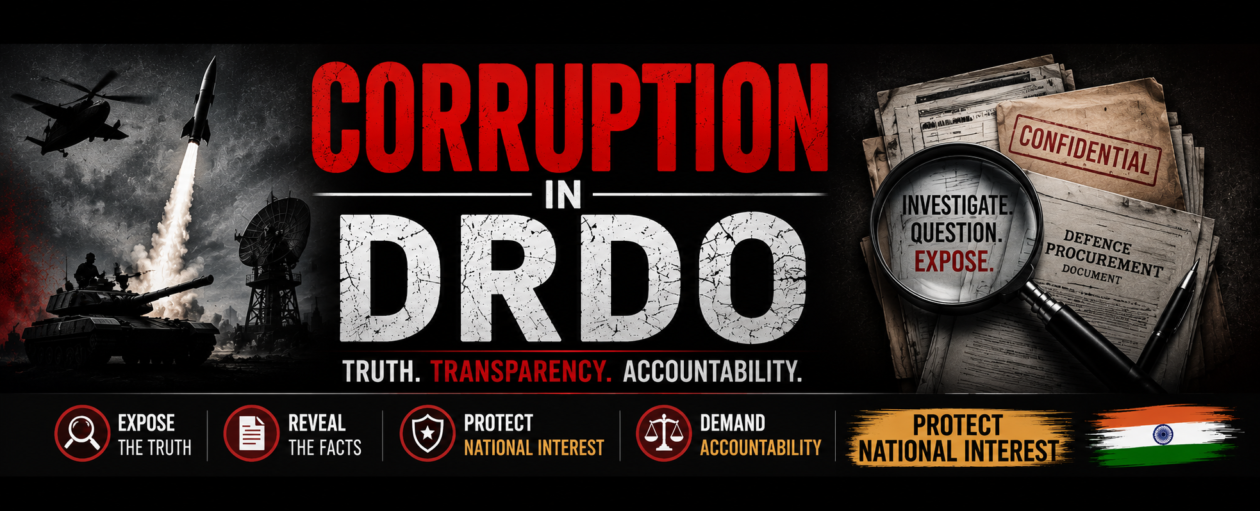
Chinks in the Armour – What ail DRDO, India’s Premier Defence Organigation?

Rediff.com – News-Special Part- I

‘How long should we wait?’

George Iype

DRDO is responsible for indigenising and constantly upgrading the country’s weapons and equipment inventory and related supplies. But the dilemma has always been to determine the correct balance between make or buy.
The Kargil Review Committee Report
Make. Or buy?

That has been a longstanding issue between the DRDO and the Services. The former complains that the armed forces make impossible demands. The Forces say the DRDO has failed to develop the frontiers of defence technology. And that its claim to produce anything and everything has virtually strangulated critical defence exports.

Experts say it was in fact the collapse of the Soviet Union that drove home the urgency to reduce dependence on external suppliers and rely on indigenous defence production. “Thus over the years, the DRDO has been volunteering to produce virtually anything for the Indian forces. The result is that it has now accumulated nearly 1,000 projects. The DRDO does not have the capability to accomplish some of these,” says Rajendra Mohan, an independent defence analyst in Hyderabad.

According to Mohan, the DRDO promises to make anything for the Forces simply to keep many of its laboratories running. “Or else, some of the labs would have already been shut,” he points out.

Experts like Mohan argue that the very method of calculating the indigenisation content of defence development and production is a matter of debate. Over the years, the government has set up 10 committees under the Department of Defence Production to identify the scope of items such as aircraft, electronics warfare systems and armament. Based on their reports, the government had been claiming for more than a decade that the self-reliance and indigenisation content will be brought up to 70 per cent before 2000.

The core point as per this plan is minimising imports and inducting indigenously designed and manufactured systems. The stress was on increased research and development and the DRDO was the agency to implement it.

But last year, the government — after a thorough review of the DRDO — admitted that the indigenisation level still remained at only 30 per cent. It then quickly created a Self Reliance Implementation Council, chaired by then DRDO chief and now scientific advisor to the prime minister, Dr Abdul Kalam. The Council’s aim is to take indigenisation to 70 per cent by 2005. But many believe like all other DRDO targets, this deadline would also slip.

DRDO scientists claim they have made significant achievements on indigenisation and in their efforts to meet the requirements of the armed forces. They include flight simulators for aircraft, 68mm reusable rocket pod, brake parachute for fighter aircraft, mini remotely-piloted vehicle, light field gun, a new family of light weight small arms systems, charge line mine-clearing vehicle for safe passage of vehicles in the battlefield, and illuminated ammunitions for enhancing night fighting capabilities in their list of achievements.

The DRDO has also developed a cluster weapon system for fighter aircraft, naval mines, next generation bombs for high speed aircraft, low-level tracking radars Indra-I and II for the army and air force, light field artillery radar, battlefield surveillance radar, advanced ship sonar systems and torpedo launchers.

“Our biggest success and pioneering work has been the testing five nuclear devices during May 11-13, 1998 in the Pokhran range,” claims a DRDO scientist.

In collaboration with the Department of Atomic Energy, DRDO in fact designed, tested and produced advanced detonators, ruggedised high volt trigger systems, interface engineering, systems engineering and systems integration to military specifications for the nuclear blast.

“Like the nuclear bomb project, several high-technology projects are in various stages of design and development. Therefore, it is ridiculous to allege that we are a useless bunch of scientists for the armed forces,” the scientist adds.

Indeed, the problem is that for years DRDO has been enmeshed in several high-technology projects that no one really knows when the armed forces will be able to induct.

“DRDO has been acting like a dog in the manger. The agency has considerably torpedoed our efforts to import state of the art equipment because it has been boasting to make every available defence equipment that we demand,” an army officer says angrily.

For instance, he says, though the defence ministry sanctioned competence build-up projects for the multi-barrel rocket launcher Pinaka in the 1980s, DRDO is nowhere near accomplishing the target. The delay has forced the army to continue to depend upon their existing outdated system, whose range is much less compared to that envisaged for Pinaka.

Concerned about terrible delays in some of the vital projects, the army, the air force and the navy are these days asking just one question: “How long should we wait?”

For the Forces, these projects are lifelines. They include India’s indigenously built surface-to-air missiles Trishul and Akash which were to have replaced the Russian-supplied OSA-AK and Kvadrat systems in 1990. Then there is the most ambitious multi-role fighter, the light combat aircraft, the indigenous production of which DRDO has been grappling with in the last 17 years.

The main battle tank Arjun, incorporating state-of-art tank technologies with superior fire power, high mobility and excellent protection has been developed by DRDO. But the army is unhappy with its performance.

There are growing concerns among the Forces, and politicians and defence experts about the terrible delays of the DRDO and its ability to keep promises. For at stake is not just the concept of indigenisation, but a huge investment of more than Rs 150 billion that the government has made for the last two decades on various projects. Would the money be completely wasted?

“Weapon systems face obsolescence very fast. So the DRDO will have to either give up some projects or reorient its functioning,” says Mohan.

Yet, DRDO has been mouthing the political platitude of indigenisation by postponing the deadlines of LCA, Pinaka, Trishul, Akash, nuclear submarines and several types of electronics warfare systems for the army, air force and navy.

The Kargil conflict last year exposed the chinks in DRDO’s armour. None other than Prime Minister Atal Bihari Vajpayee echoed the Forces’s worries when he told DRDO directors on August 6, 1999: “Technology needed for mountain warfare is to be given the highest priority.”
But the biggest worry for DRDO is not the bureaucratic delays and sanctions, but the Indian air force. Faced with diminishing number of its ageing fleet, the IAF holds DRDO responsible for promising to deliver the LCA before year 2,000, thereby considerably upsetting many of its aircraft acquisition plans.

Suspecting that DRDO will never deliver the LCA, the IAF has now embarked on an ambitious project to upgrade 100 MiG-21 aircraft.

Despite the heavy odds, DRDO still remains confident that it will roll out the country’s first indigenous aircraft before 2002.

“We will induct 200 LCAs into the Indian Air Force between 2003 and 2010,” Dr Abdul Kalam told a group of aeronautical scientists before he handed over DRDO’s charges to Dr Vasudev K Aatre.

But there aren’t many who believe that promise will be fulfilled.

DRDO – Revenue and Build up

14th November 2011

To
The Defence Minister
Room No -104, South Block
New Delhi – 110011

Reference: a)  Your letter No 1409-VIP/RM/2011 dated 21st March 2011
                       b)  Your letter No 1409-VIP/RM/2236 dated 20th May 2011

Honorable Sir,

During UPA-I you assured the nation to fixing accountability on DRDO an organisation which has never been questioned since its inception in 1958.

Sir, until 1980 the cost of projects were few crores but due to the visionary thought of then Prime Minister late Smt. Indira Gandhi the projects/programs were planned for self reliance in south east Asia and in particular in the Indian sub continent. The neighbors Pakistan and China were supporting each other to keep their upper hand but nothing deterred Smt. Gandhi to take decisions which may culminate to self reliance in the defence sector.

Initially the projects were planned collecting inputs from the literature available elsewhere. The proposals worked out where the cost benefit ration never assessed.

The changing technology was constraint and therefore projects/ programs during 90’s were given extensions time repeatedly, in some cases without enhancing the cost, where the cost was enhanced with proper justification were made. The examples are LCA, MBT, SAMYUKTA (EW) etc.

Easy methods were worked out under the guys defence secret to persue the projects beyond sanctioned time, without financial implications. Today in the last ten years the projects/ programs for which PDC extended did not consume more than 7000 crores rupees an amount equal to the annual budget of DRDO.

What is the fall out?

The revenue and buildup money sanctioned for running the projects were diverted to meet the day to day expenses of the projects the projects/ programs, which were running on PDC extensions. The manpower, the infra structure, the electricity bills, the salary, the TA/DA expenses were more than the cost of build up.

This imbalance between revenue and buildup was supposed to be checked by finance ministry.

Without active project and constant engagement of manpower in dead project resulted in to growing incompetency of laboratories.

What to talk about the Scientist ‘G’, Scientist ‘B’ were started giving justifications for the failures and compared the annual expenditure of DRDO as the expenditure meet to counter the natural calamity like earth quake.

Then the top brass of DRDO says 100 crores projects is not a big amount for DRDO. Indian Air Force is losing every alternate day on a MIG-21.

Let SA to RM justify the extensions of services to his beloved/blue eyed boys.

Sir, there are hope of Indian people with you please fix accountability on DRDO.

At least the finance ministry should cross check the equal flow of money in revenue and build up.

Thanking you 

Regards     
Prabhu Dayal Dandriyal
21-Sunderwala, Raipur, Dehradun-248008
Phone – 2787750, Mobile- 9411114879,
E-mail id prabhudoon@gmail.comprabhu@dandriyal.com Website –  www.corruptionindrdo.com
 
Copy to
1.       Prime Minister, PMO, south Block, New Delhi – 110011
2.       Finance Minister, North Block, New Delhi – 110011
3.       Smt. Sonia Gandhi, Chairperson, United Progressive Alliance  Fax no.23018651